Tuesday, September 18, 2007

Σεπτέμβρης = Νύχτες Πρεμιέρας 20-30/9/08


Κάθε Σεπτέμβρη οφείλω να παραδεχτώ ότι το καλοκαίρι τελείωσε και μαζί με αυτό τα μπάνια και οι διακοπές μου. Αυτός ο βασανιστικός μήνας για μένα σηματοδοτεί το τέλος της σχετικής ξεγνοιασιάς και χαλάρωσης μου και την αρχή του προγραμματισμού και των προβληματισμών. Όλες οι δουλειές που είχαν ανασταλεί κατά τη θερινή περίοδο έρχονται με νέα βαναυσότητα ξανά στο προσκήνιο. Η βαριά κατάθλιψη που απειλεί να με καταπλακώσει αποφεύγεται την τελευταία στιγμή χάρη στη βαθιά μελέτη του προγράμματος του Αθηναϊκού Φεστιβάλ Κινηματογράφου και με τον προσεχτικό σχεδιασμό για το τι θα δούμε και τι θα αφήσουμε. Όπως έχω ξαναπεί (πέρυσι τέτοια εποχή) ο στόχος είναι να δω όσο το δυνατόν περισσότερες ταινίες οι οποίες για κάποιο λόγο δεν θα διανεμηθούν στους κινηματογράφους κατά τη χειμερινή περίοδο. Πρόκειται για έργα που ανήκουν σε αφιερώματα σε παλιούς σημαντικούς σκηνοθέτες (φέτος το αφιέρωμα είναι στον Μαξ Οιλς) ή έργα μικρών σκηνοθετών συνήθως εθνικών κινηματογράφων που εξαφανίζονται κάτω από το βάρος της δημοφιλέστερης και μεγαλύτερης Αμερικάνικης κινηματογραφικής παραγωγής. Φέτος μας προσφέρετε η δυνατότητα να δούμε κάτι από Ινδία με το αφιέρωμα του Μπουντατεμπ Ντασγκούπα, την Κίνα με τον Γιναν Ντιαο, την Ν. Κορέα με τον Παρκ Τσουλ Χι, την Ιαπωνία και το Μεξικό. Για μένα τα νέα ονόματα είτε ανήκουν σε κάποια «εξωτική» κινηματογραφία είτε στον συμπαθέστατο Αμερικάνο Ανεξάρτητο σημαίνουν νέα βιώματα, νέες εμπειρίες και προπάντων τη γέννηση νέων προσδοκιών. Γιατί άμα συμπαθήσεις ένα σκηνοθέτη που μέχρι τώρα δεν τον ήξερες μπορείς από δω και πέρα να ψάχνεις και να παρακολουθείς τα έργα του ελπίζοντας ότι θα ξανασυναντήσεις το στυλ και τον κόσμο που στην πρώτη ταινία σε μάγεψε.

Το φεστιβάλ, όμως, έχει φροντίσει και για αυτούς που επιμένουν να έχουν την ευχαρίστηση του να δουν πρώτοι μια πολύ-αναμενόμενη ταινία με διάσημο σκηνοθέτη και γνωστά ονόματα ηθοποιών. Σε αυτή την κατηγορία βρίσκεται το πολύ- διαφημισμένο ντοκιμαντέρ Earth και το Atonement του Τζο Ραιτ με την Κίρα Νάιτλι. Το πρόβλημα είναι ότι και τα δύο έργα προβάλλονται την ίδια μέρα και την ίδια ώρα οπότε πρέπει να επιλέξετε τι θα δείτε. Άλλη πρωτιά πάλι είναι η προβολή του I am not there του Τοντ Χεινς για τη ζωή του Bob Dylan με Κειτ Μπλάνσετ, Ριτσαρντ Γκιρ και Κριστιαν Μπειλ ή το HairSpray του Άνταμ Σάνκμαν.

Επιπλέον υπάρχουν ταινίες ειδικού ενδιαφέροντος για «ειδικό» κοινό. Πολλές ταινίες και ντοκιμαντέρ για είδη μουσικής, μουσικούς κτλ. (Κόκκινος Έλβις, The Old Weird America: Harry Smiths anthology of American Folk Music, Anita Oday: the life of a jazz singer κ.τ.λ.). Για τους καρτουνίστες, επίσης, υπάρχει μια μεγάλη έκπληξη. Η Χιονάτη και οι Εφτά Νάνοι της Disney του 1937 σε φρεσκαρισμένη επανέκδοση. Εκτός από το κλασσικό αριστούργημα κινουμένων σχεδίων μπορούμε να απολαύσουμε την αξεπέραστη ιαπωνική τεχνική και τη ψηφιακή τεχνολογία. Ιδιαίτερα εκτεταμένο είναι το αφιέρωμα στο Grindhouse όπου ταινίες β-αισθητική με μπόλικο αίμα, splatter, και λίγο σαδομαχιστικό πόρνο έρχονται από την υποκουλτούρα και το κιτς μια άλλης εποχής να διεκδικήσουν μια θέση στη φαντασία και στο ενδιαφέρον του υποψιασμένου κινηματογραφόφιλου. Γιατί όταν το κιτς φτάνει στην απόλυτη υπερβολή συχνά αποκτά αισθητική αξία ( The Candy Snatchers, Invasion of the Bee Girls, Supers-Vixens και πολλά ακόμα που και ο τίτλος τους ακόμα με κάνει να γελάω).

Σε πολλές προβολές θα είναι παρόντες οι σκηνοθέτες των ταινιών ή άλλοι συντελεστές πρόθυμοι να απαντήσουν στις ερωτήσεις των θεατών. Στο βιβλιοπωλείο Ιανός έχουν οργανωθεί συζητήσεις με σκηνοθέτες αλλά και ανθρώπους συγκεκριμένων χώρων (π.χ. του supervising animator της Pixar) για τις ίδιες τις ταινίες, τα θέματα τους αλλά ακόμα και τις τεχνικές κατασκευής τους. Νομίζω ότι εάν κάποιος έχει ένα ιδιαίτερο ενδιαφέρον θα μπορέσει να μιλήσει με πρόσωπα που είναι μοναδικά στον τομέα τους. Διάφορα party τέλος έχουν προγραμματιστεί ώστε να βγάλουν εκτός καθημερινού προγράμματος όλους τους κινηματογραφόφιλους που μετά τη βραδινή προβολή έχουν όρεξη για συνέχεια. Για όλα αυτά, περισσότερες πληροφορίες στο http://www.aiff.gr/ όπου μπορείτε να κατεβάσετε και το πλήρες πρόγραμμα. Ελπίζω να σας βρω εκεί μόνοι ή με παρέα για να ανταλλάξουμε απόψεις από κοντά. Ραντεβού στις αίθουσες!

Tuesday, September 11, 2007

Ανακαίνιση των ομορφότερων αιθουσών της Αθήνας: Απόλλων & Αττικόν

Όταν ανοίγει ή ανακαινίζεται μια κινηματογραφική αίθουσα….ανοίγει η ψυχή μου! Αλήθεια σας λέω! Αισθάνομαι ένα κύμα ευφορίας όταν σκέφτομαι ότι ακόμα μια όμορφη αίθουσα θα ανοίξει τις πόρτες της στο κοινό για να προσφέρει μαγεία. Σήμερα λοιπόν, που μου ήρθε δελτίο τύπου από την κ. Λ. Τσαλάκη για την ανακαίνιση του Απόλλωνα και του Αττικόν με την ακολουθία αντίστοιχων φωτογραφιών αισθάνθηκα ανακούφιση και ικανοποίηση.
Το Αττικόν ειδικά είναι πιστεύω μια από τις ομορφότερες αίθουσες αν όχι σε ολόκληρο τον κόσμο τουλάχιστον στην Ευρώπη. Χτίστηκε το 1914 από τον διεθνώς αναγνωρισμένο αρχιτέκτονα, Αλέξανδρο Νικολούδη. Η ιστορία του Αττικόν σαν ένας χώρος που κάποτε φιλοξενούσε θέατρο είναι εμφανής στη διαμόρφωση τής αίθουσας του. Η πλατιά σκηνή, η μαρμάρινη σκάλα, ο πλούσιος διάκοσμος στο ταβάνι, ο πολυέλαιος, τα χαριτωμένα θεωρεία φανερώνουν την πολυτελή ιστορία του συγκεκριμένου κινηματογράφου. Για μένα οι θέσεις στην μπροστινή σειρά του θεωρείου του Αττικόν προσφέρουν την απόλυτη θέα στην κινηματογραφική οθόνη. Ένας φίλος δε λέει ότι ποτέ δεν ξεχνάει ποια έργα έχει δει στο Αττικόν. Με λίγα λόγια οι άνθρωποι που έχουν στην κατοχή τούς αυτή την αίθουσα έχουν καθήκον να τη σέβονται και να την κανακεύουν γιατί το Αττικόν είναι ένα από τα λίγα σύγχρονα μνημεία της Αθήνας.
Δύο χρόνια πριν, τέτοια περίπου εποχή, στις Νύχτες Πρεμιέρας είδα στο Αττικόν το Νησί του Κιμ Κι Ντουκ. Με έκπληξη και τρόμο διαπίστωσα ότι κατά τη διάρκεια τής προβολής άρχισε να βρέχει μέσα στην αίθουσα. Σκέφτηκα τότε με λύπη ότι το νερό της βροχής θα κατάστρεφε τα υπέροχα βελούδα της σκηνής. Με τη φαντασία μου είδα την αίθουσα σταδιακά να σαπίζει και να παρακμάζει. Ελπίζω και φαντάζομαι ότι δύο χρόνια μετά η ανακαίνιση χάρισε στην αίθουσα όχι μόνο νέο λούστρο αλλά και ότι έλυσε οριστικά τέτοιου είδους προβλήματα. Κοιτάζοντας τις φωτογραφίες της ανανεωμένης αίθουσας χαίρομαι εις διπλούν γιατί οι ιδιοκτήτες της σεβάστηκαν το παρελθόν και τα ιδιαίτερα χαρακτηριστικά της αίθουσας. Οι τοίχοι βάφτηκαν με χρώματα διακριτικά που τονίζουν όμως τις γύψινες διακοσμήσεις. Τα κόκκινα βελούδα διατηρήθηκαν. Οι καρέκλες είναι νέες, υποτίθεται πιο αναπαύτηκες (οφείλουμε να δοκιμάσουμε για να βεβαιωθούμε). Επιπλέον, πληροφορούμαι ότι στα θεωρία τοποθετήθηκαν δερμάτινες πολυθρόνες και τραπεζάκια. Ολόκληρος ο τεχνολογικός εξοπλισμός ήχου αντικαταστάθηκε με το τελευταίας τεχνολογίας μοντέλο Dolby Digital.
Αντίστοιχα ανανεώθηκε και ο Απόλλωνας. Μπορεί ο Απόλλωνας να μην είχε ποτέ την χλιδή και την ιδιαίτερη λάμψη του Αττικόν ήταν όμως πάντοτε μια εκλεκτή αίθουσα. Και σε αυτή την περίπτωση οι επεμβάσεις των ανθρώπων της Cinemax και Σκούρας Φιλμς φαίνονται να είναι ουσιαστικές και διακριτικές. Εδώ, τα χρώματα έχουν αλλάξει ριζικά. Νομίζω όμως ότι ο συνδυασμός του πράσινου με το καφέ ταιριάζει στον χώρο καλύτερα από το παλιότερο κάπως ψυχρό μπλε. Επίσης, άλλαξαν οι μοκέτες, τα καθίσματα και το σύστημα προβολής. Ευτυχώς οι πίνακες –ποπ πορτρέτα-των σταρ του Hollywood, το σήμα κατατεθέν της αίθουσας εξακολουθούν να δεσπόζουν στο χώρο.
Τέλος, ο χώρος της αναμονής διπλασιάστηκε και τα ταμεία αυξήθηκαν ώστε οι θεατές να εξυπηρετούνται πιο εύκολα και πιο γρήγορα. Οι θέσεις παραμένουν αριθμημένες και ο θεατής μπορεί να αγοράζει (και να προ-αγοράζει) το εισιτήριό του από το ταμείο, τηλεφωνικώς, ή μέσω internet. Ένα ανανεωμένο μπαρ συνοδεύει τον χώρο.
Περιμένω λοιπόν, με ανυπομονησία διπλή την έναρξη του κινηματογραφικού φεστιβάλ Αθηνών. Με τις Νύχτες Πρεμιέρας θα έχω την ευκαιρία να διαπιστώσω ιδιοις όμασι τις αλλαγές και να εξακριβώσω εάν είναι όντως τόσο θετικές όσο φαίνονται από τις φωτογραφίες και ακούγονται από το δελτίο τύπου. Ένα μόνο με ανησυχεί …. η νέα τιμή εισιτηρίου ποία θα είναι; Γιατί όπως πάμε ο κινηματογράφος σε λίγο θα είναι μια ακριβή και πολυτελής έξοδος. Ας μείνουμε ωστόσο στα ευχάριστα και στην οπωσδήποτε θετική ενέργεια της CinemaX και Σκούρας και ας ελπίσουμε για τα καλύτερα.


Σχόλιο:
Τα παράπονα μου για τη βροχή στο Αττικόν βρίσκονται στο αρχείο μου "Κριτική Κινηματογράφου μόνο στην επιφάνεια"
http://helencomments.blogspot.com/2005_10_01_archive.html

Wednesday, September 05, 2007

Zodiac


David Fincher’s latest film is based on a true story of a serial killer. This true story offers Fincher a chance to do a film similar to the Seven, the film that made him famous. Zodiac, however, even if it is a fairly good film, never manages to become the masterpiece that Seven was.
Basing a film on a true story has its own advantages and disadvantages as it is painfully obvious in Zodiac. From on hand a true story on a serial murder always manages to intrigue the spectator and coach him into seeing the film. On the other hand if one is basing his script on a real story one is rather restricted by it. Sometimes reality can be less “tidy” than fiction. Unfortunately Zodiacs script, bonded to reality, doesn’t manage to create a peak that would heighten the spectator’s interest. Moreover there is no real ending. The main character that investigates the killings out of his own accord never manages to capture the killer. Instead he writes a book giving the evidence that point to a man without proving beyond doubt that he is the murder. The script has no turns and no real surprises. The man that seems to be guilty from almost the middle of the film is actually the killer. If some spectators make speculations on other characters it is only because in a murder story we are used to big surprises where the killer is the one that is the least expected to be. The lacks of the script can be easily justified by the fact that the story is restricted by its reference to reality. Not all films that are referring to a real story have these defects. Erin Brockovich easily springs to mind as a film on true story that had an excellent and very efficient script. Why would Fincher choose to do a film on a story that leaves the spectator so unsatisfied? Maybe he wanted to pass the message that in real life not always the bad guys are caught and punished. A big plus of the story is the main character: A cartoonist working at a newspaper who gets obsessed in solving the mystery. While the police gives up, he continues his research, loosing his wife and children until he has finally justified his curiosity and his sense of justice (?).
Fincher manages to create a dark filthy atmosphere full of despair and melancholy. Several of the scenes are at night time, while others take place in grey stark offices. On the contrary the last scene when the cartoonist faces the killer the scene is brightly lighted in a cruel white light. In Seven Fincher had used the same trick. In that film, however the colors remained vivid and rich among the dark. In Zodiac, all the colors seem washed away emphasizing the bleakness and the frustration of the reality. The down play of the colors creates a more documentaristic effect and conveys the boredom and hopelessness of a society where bureaucracy inhibits the police and where no one cares to catch a murder when he is no big news anymore.
The actors play their roles beautifully. Jake Gyllenhaal portraits very well a man who gets more and more obsessed with solving a riddle. The spectator might wonder if it is more important for him to catch the man who cruelly murdered so many people or to just solve the puzzles behind which the murderer hides his identity just for the shake of solving a riddle.
If you manage to get pass of the feeling of un-fulfillment and dissatisfaction you get as soon as the film ends, you can realize that Fincher has managed to do a good job. It manages to sustain the spectators attention even if doesn’t thrill him in the way that other “horror’ films do. The images Fincher created manage to convey successfully the undertone of the film. Zodiac even if is not Fincher’s masterpiece is a film worth of our notice.

Monday, July 23, 2007

Inland Empire: Lynch Unfortunately Overdoes it


Truffaut during his carrier as a film critic used to say that the worst film of a director auteur has more worth than the best film of a simple director. This phrase reflects completely my feeling for Lynch’s latest film.
Inland Empire has no plot and no characters. The film begins with a simulation of a story line. A strange woman visits a Hollywood star –Laura Dern- and tries to warn her against participating in a horror film. The last time the film was produced the main actress died. The spectator watches scenes form the “real” life of the actress, from the film that is being filmed and some scenes from a parallel universe where Laura Dern is a completely different person? Everything is mingled together and the spectator can scarcely tell which scenes belong to which story line. Time continuance and perception of space collapse completely. Several scenes are presented two times from a completely different point of view. The first time this happens one can suppose that he\she is witnessing a kind of vision of the vision that Laura Dern has. Lter on though even this assumption proves without ground because not only do we go back to a past scene but Laura Dern is presented at the same time and space simultaneously as two different but the same persons. The last half hour of the film resists even to this weak effort of explaining and describing. Time goes back and forth becoming completely irrelevant while laura Dern mostly and other characters multiply and become two or three different person simultaneously.
In Inland Empire Lynch continues his philosophical line of thought that started with hinted clues at Twin Peaks and revealed it self more strongly at Lost Highway and Mulholland Drive. He chooses to question our well built and standardized perception of time, space and identity competing with some of the most radical ideas in postmodern science and philosophy. In the Western logic time has been conceived as straightforward and linear. Space as something that can easily be determined and understood. And Personal identity as something solid, unified and unchangeable though the years. Lynch however has been wondering if time is not linear will our perception of space and identity collapse? In Lost Highway time forms a 8 and every actor seems to be two person at the same space. In Mulholland Dr. things get more complicated as time follows no specific course but is fragmented. As a result every actor in the film is two completely different personalities. In Mulholland Drive though the director has hidden carefully some signs and links between the scenes, that a very film educated careful and suspicious spectator can discover and recreate the somewhat linear plot. Still there are some scenes in this film that are floating around more or less unconnected to the central branch of the story.
In the Inland Empire there aren’t any connections, keys or links that can lead someone to the reconstruction of the film. Lynch didn’t bother to create any because he didn’t wish his spectators to be able to follow or make sense of the time, the space and the characters of the film. He wished to show an environment with no linear time, no specific space and no stable characters. Everything is disconnected and fluid. West thinkers used to think that reality is objective, stable and rigid. Lynch provokes us to accept a world where nothing is certain. In Existenz Cronenberg’s main character Allegra says something like that: while people could do so much are programmed to accept so little. When everything is rigidly pre-conceived possibility lessens and freedom diminishes in already given choices. In a fluid universe more is possible.
The problem with Inland Empire is that is so… so difficult and incomprehensible that appalls not only the spectator but also the Lynch fanatics. The director has kept the intensity of his ideas and the sticking intensity of the sensations he amazingly manages to create form unconnected images and sound and has stripped them from the ruse of a myth. It is some like cruel experimental art that hasn’t found its balance yet. It is a raw material with its ingenuity intact but its form is well…unformed. Inland Empire should be a film of maturity well all his previous ideas should be there but balanced to a well though planned form. On the contrary Inland Empire is a film of puberty. Full of power and unfulfilled expectations.

Monday, April 30, 2007

The curse of the golden flower: Beautiful images terrible film


The new film of Yimou Zhang (The Hero) continues the tradition of the Chinese
films with the beautiful and well organised scenes. One could say that
in this particular film the richness of the colors and the balance of
the image is more prominent than ever. On the other hand, the film has
no meaning and no story. It seems that the director just needed an excuse to create an epic series of beautiful pictures. When however the pictures have nothing but boredom to convey eventually they loose their appeal and become a mere extravagance. When the film ends you have like when you eat too much junk food or too much sweets. You are discussed by yourself for having stayed in the theatre for almost three hours.
OK some might accuse me of being too tough on it (even if i dont think so)
but lets compare this film to some of his previous creations like the House of Flying Daggers or even better the Hero. Especially in the Hero case the director has managed not only to create astonishing pictures but also to use the colors and the images in order to convey a meaning.
In this case beauty serves a purpose as the colors -for example- have a
symbolic meaning.The problem is -I suspect- that Yimou Zhang has probably discovered that his pictures sell well in the west. As a result he reached a maniera where the richness of colors and the epic images serve nothing.
The script of The curse of the golden flower has nothing to offer. Intricate relationships and corruption withing the royal family is often demonstrated in films in various and more sophisticated and well though methods. The twists and turns of the plot are rather obvious and do not manage to surprise or get the spectator interested. The pace of the film is slow and tiring. The only remotely interesting idea is the one of the long term poison. The wife of the emperor is poisoned by
her husband. Even though she knows it she is forced to swallow the medicine-poison every few hours. The servants bring her the supposed medicine -in reality
the poison- with an extreme ceremony and watch her drink it. The film begins with this scene. It is a good example of how a simple event can change meaning and connotations according to the feelings of the spectator. What in the begging of the film is simple and trivia becomes sinister and tragic when the information on the true nature of the medicine is revealed. Besides that little drop of some
interest the film is completely dreadful. I will probably have to watch The Hero one more time just in order to wash the experience of The curse of the Golden flower out.

Tuesday, April 10, 2007

And a comment on Greek Film Theatre Reality

Those who frequent my blog know that not only do I do my phd on David Lynch but i also have a passion for the particular director. Therefor ever since I have heard that his new film was completed and and this year would be releasedI have been wainting with a proper extend of anxiety. I have made plans with which friend i am going to see the film in order not to spoil the experience and have someone fairly educated on Lynch's whims to discuss it afterwards. Most importantly i have resisted the temptation to down load it from some place on inetrnet and see it at home at my TV. A David Lynch film should be watched on big screen and advanced technologially sound equipment a theatre can only provide. The images and the sounds of Lynch's films are so intentionally intense that in order to understand the full impact you have to have your first at least viewing in a theatre. So, the film was presented at the Thessaloniki film festival but unfortunately i live in Athens 500kilometres souther. I thought of travelling just for the film but since i have been playing the adult the recent years and I work and have I a week schedule well i just couldn't make it. As a result i have been waiting for the film to come out at the Greek theatres and believe me in Athens we have plenty of those.
The problem is that even if the cinema magazines have made their announcements and the presentation of the film an ugly rumor has been circulation among the cinephills. It seems that no company will take the risk of launching the newest David Lynch film to the Greek cinema market. Unbelievable! Even if the film has taken contradictory reviews form the Venice and N.York Festival David Lynch is hardly a new or a an unknown director. Many- I believe- would at least be curious if not anxious like me to see his film. So Inland Empire will come out directly on dvd like some second class b-movie? while films like Fly Boys that Hollywood sells will have an official premiere? Not even small central theatres that usually play the independent films wont be able to present the Inland Empire?
I demand Inland Empire on a theatre screen. Otherwise i will be heavily disappointed. I might make jokes on this subject but this example is just a symptom of a bigger and uglier situation.
Unfortunately even in the capital of Greece, in Athens rarely do we have the chance to see something other than Hollywood or English speaking film.Until very recently Japanese Chinese Korean films were never shown even if there is a strong cinematic current in these countries. In a city of millions not even a small theatre does take the risk to make a difference and present an alternative film program. Do they really
think that in a city of millions a central alternative theatre wouldn't gain it's own faithfull audience? After so many years of film attending this lack of initiative never fails to amaze me. Therefore I am forced to conclude for another time yet : Greece is a fucking suburb

Today 30 0f April I heard the good news: It is official Lynchs' new film will be out on the 10th of May. My own interpretation of it will be posted on the blog soon!

The Good Shepherd: a complex slow film with no meaning


Robert De Niro has made a film about the foundation and the history of the CIA. He creates a fantastic character in order to tell a true story. Great and famous actors play all the roles, small and big ones of this film. De Niro in one of his first attempts as director he does the required job adequately but without creating a personal style or something unique.
Mat Damon is represented as a humble unknown American hero. He sacrifices the love of his family, his need of human contact and even his humanity in order to protect his country. His efforts are never recognized. He is a good shepherd because for De Niro it is more important to take care of your country and of society than to take care of your family. It seems that he declares that even if CIA has done unforgivable things, it is the necessary evil for America and America’s culture to prevail. Therefore the meaning of the film is rather conservative and patriotic.
Besides its meaning the film is not even that well made. The history of the CIA is complex. One has to have an adequate knowledge of contemporary history and politics in order to be able to understand the historic references. To make things worse De Niro has also chosen an intricate narrative. Instead of the usual linear story line in this film we have two plots. The first one refers to the past and the other to the somewhat present. As the film progresses the two diverse story lines meet and eventually move further together. Moreover, Mat Demon in the central role is the only actor who doesn’t age along with the others. He has exactly the same face, hair style and everything from his student days up to his middle age. Even if this not aging of the central character is an interesting and apparently a symbolic choice it makes the situation even more impossible. It is rather difficult for the spectator to decipher when the film refers to the past and when to the present. This intricate montage and narrative has no special meaning that would at least partly justify the confusion that is created. As I said before even if De Niro is doing an adequate job as a director the result is rather flat and mediocre. Great actors have been used for all the roles. They manage to give great performances. I am rather impressed by Angelina Jolie in the role of the neglected wife. On the other hand choosing the beautiful and sexy Angelina for this role is probably bad casting. I don’t many would believe that a woman so beautiful would be someone that her husband never loved or never desired.
The Good shepherd is a three hour almost long film with slow pace difficult to follow script that even if you can watch it with some interest in the end you have to wonder why it was made. I was definitely not made for entertaining reason because in that case it would include action scenes and rapid pace. It is a film made for thinking, but it offers nothing to contemplate on.

Monday, March 26, 2007

Dreamgirls: Great voices, good script and still equals to a mediocre musical


The success of the Moulin Rouge some years ago gave new life to a forgotten genre. As a result, musical is back. Chicago impressed spectators with its intricate dancing numbers and its excellent music and singing. In the Dreamgirls case the musical has limited itself to music and signing. The songs and the voices are beautiful but the dancing numbers are missing. In the musical genre most of the spectators’ enjoyment derives from the harmony of the movement of the dancer and the rhythm of the editing. In Dreamagirls case there is no dancing to act as the optical equivalent to the beautiful singing. Sometimes, therefore, the spectator gets bored waiting for the singing to finish and the myth to progress.
Dreamgirls is based on a true story. It describes with no flattering way the begging of the career of Diana Ross. The Deramgirls, a black female group, has as lead voice a rather fat girl. She is deeply in love with the manager. When the group tries to become famous, the manager puts in the lead a second class voice which belongs to a beautiful girl. Eventually he leaves his first love and marries the pretty girl. It is a history of total betrayal. The protagonist is betrayed and left aside by her lover, by her best friend and by her brother. The pretty girl is in fact Dianna Ross. The script is quite good. It has its peaks and anxiety and depicts rather well the intricacies of the music business and the era. The soundtrack is quite successful mostly due to the exquisite voice of Jennifer Hudson. She proves much more talented than the famous singer Beyoncé Knowles. Still too much singing even in scenes where is not really needed has made in some points this movies boring and slow.
Dreamgilrs is a movie that could have been special. Good story with a well made script. Good actors and moreover great voices. Still it didn’t make it. I think that the producers were carried away by their discovery of a new talented voice and actress. They wanted to exploit and impress the audience by their discovery. As a result they created too many scenes with singing. The editing is too loose and the film at places has no rhythm. A much stricter editing would really lift this movie off the ground. Still for those who love the music of the era, there is the soundtrack as a consolation price.

Wednesday, March 14, 2007

The labyrinth of Pana: a cruel fairy tale


My expectations for this film had risen high since I had seen the trailer and heard the rumors and the reviews. Everyone has a kind of film that he/ she prefers. I always liked the dark fantasy films that resemble to children’s nightmares. Strong gripping images and mysterious atmosphere. That’s my kind of think. Films like The City of Lost Children, Delicatessen, Dark City and of course David Lynch’s films. From the trailer I built up an appetite for a film that would become part of my list of film-fetish. The labyrinth of Pana came close to become one of my beloved films but eventually it didn’t make it.
Let’s however, see at this film in the right perspective. The director Guillermo del Toro has no great achievement to present from his film past. The fact that he has written a film like The labyrinth of Pana after film like Hellboy and Blade II is in itself a very pleasant surprise. From his previous films one could find the elements of a strong and rich ability to built gripping images. The labyrinth of Pana, however, is a film that has more to offer than the gripping images. It has meaning.
During the Spanish Civil War a small girl if forced to deal with her new stepfather, an almost paranoid fascist. Her pregnant mother moves into his house in the country. As soon as she gets there she fells ill and dies during giving birth to a son. The worse the situation gets with her mother the more the child escapes into her fantastic world. In this world she is a princess of the underground world. She has to pass three difficult tests in order to be able to return at her kingdom and at her father. The Pana guides her through her ordeals and tests. But does he say the truth, does he guide her to her rightful place or he prepares to trap her? The full power and extend of a child fantasy is presented in great images. On the other hand at full contrast we become witnesses to the battles between the fascists and the rebellions. As more and more people are tortured and killed the child fantasies also become more dangerous, dark and violent. Her ability to escape the cruel reality to a dream world withers and she ends up trapped in a world equally cruel and frightening. In the end she manages to do her last leap into a dream fantasy by achieving her end and becoming a princess reunited with her father and mother in the world of the dead. In this way she dies with a smile.
The contrast between the cruel reality and the nightmarish fantasies of the child is always sharp and hard. The spectator can feel the violence of the real world seeping into the fantasy world and contaminating it. One can not relax during this film can not find relief even in the world of Pana. He has to stay on the edge and be prepared fro the extremely raw images that attack him. I am a well accustomed viewer of thrillers and splatters and still couldn’t handle the gore. Actually most of its violence is insinuated and little is actually demonstrated. Still most spectators would say that this film is extremely harsh.
The labyrinth of Pana has a lot to offer: An atmosphere with intense images. A good, original script with meaning. It is truly a good film even if doesn’t manage to become an excellent film. Something very small and fine is missing. It might be that the good atmosphere sometimes rises for small delicate details of an almost naturalistic world. Here the fantasy scene might have been a little too extravagant. Unfortunately the fantasy and the real world are too well divided and distinctive. I would prefer it if for a moment or two the spectator couldn’t understand in he/she was in the fantasy world or in the reality. The feeling of disorientation he would have in this case would probably add a lot to the atmosphere of the picture. It might have been the all too conventional end with the little girl eventually becoming the princess of a too beautiful world. Sometimes you can’t really put your finger on to what is lacking in order to transform a good picture into a filmic legend. Still The labyrinth of Pana has offered me images that stayed with me and that’s always a good sign. Maybe Guillermo del Toro will do better next time I have high hopes for him!

Tuesday, March 13, 2007

The Perfume: The Story of a Murderer, an honest effort to do justice to the book but nothing more


Every film that is based on a popular book takes a big risk. The ones that have already read the book will judge the film severely. They will compare it no only to the text of the book but to the fantasy images they formed themselves while they read it. Therefore the film is already popular the moment it comes out taking advantage of the fame of the book. On the other hand it is forced to meet all the preconceptions of the readers.
Before commenting on the film I have to confess that I have read the book. It’s been years since I read it but I can still remember the big impression it had on me. While reading I could feel a slight perfume drifting on the air. Under these circumstances I would say that I am not the most suitable person to comment on this film. In the first place I wasn ’t very sure that I even wanted to watch it. I was afraid that it might destroy my memories from the book. The film however managed to win me over at least at some extend. Adequately faithful to the book the film manages to present all the key elements of the plot. The script is coherent enough with suspense and the proper peaks of anxiety. Why though, a script that has been so close to the book creates a completely new scene in the end of the film? Why is the somewhat provocative scene of the orgy needed? Is it there just for the provocation? Or they need it in order to create a peak right after the break according to the classical Hollywood narrative style? In any case I think that the scene is redundant. Another thing that it bothers me in the script is that the fact that the hero doesn ’t have any personal smell is only insinuated and not emphasized as it should have been. The
lack of personal smell is very important in the book as it is one of the main motives of the hero’s effort to create the perfect perfume. The perfume he creates will supplement his own smell giving him the opportunity not only to just fit in the world ( he has always been an outcast) but also to take his revenge on the society that has rejected him. by creating the perfct perfume he can be anything he wants, king or even a god. In the film the personal smell of the girls is a symbol of their beauty, youth and potential. The murderer kills them in order to find a way to preserve all that beauty,freshness and potential. If any of those young women aged their beauty
would wither and fade away. As a result, the film remains faithful to the
facts of the book. But it has a different interpretation of the facts that are presented.
Aesthetically, the detailed images with the rich colors convey convincingly enough the sense of smell. The powerful warm colors of the province make the spectator almost feel the luscious perfumes of the nature and the murdered girls. It is a film that achieves to be almost as sensual as it the book.
In the end though Perfume remains a mediocre film. It doesn’t insult your ntelligence. It tries to convey the unique atmosphere of the book but it doesn’t manage to add something, its own characteristic smell to the myth. It is an honest effort but nothing more. After all these perfumes and colors it remains rather odorless and colorless.

PS
It has
taken me long time to post something new at my blog. I am sorry. Both
my work and my studies have taken most of my time. I have seen plenty
of movies during this time and i am determined to do some catching up
at the blog so .....stay tuned!

Wednesday, February 14, 2007

Sugar Town: Οι γαμπροί της ευτυχίας, ένα κακεντρεχές ντοκιμαντέρ για μια άθλια επαρχία


Φίλοι μου, με παρακάλεσαν να δούμε την εν λόγω ταινία. Κανείς μας όμως δεν είχε συνειδητοποιήσει ότι η ταινία αυτή ήταν στην πραγματικότητα ένα ντοκιμαντέρ και όχι μια κωμωδία όπως αρχικά νομίζαμε.

Λίγα χρόνια πριν ο δήμαρχος της Ζαχάρω υποσχέθηκε στους ψηφοφόρους του ότι θα βοηθήσει στην επίλυση ενός βασικού προβλήματος της περιοχής, της έλλειψης γυναικών. Υποσχέθηκε δηλαδή ότι θα πάει στη Βουλγαρία για να εξασφαλίσει γυναίκες στους υποψήφιους γαμπρούς της περιοχής του. Πραγματικά όταν εκλέχτηκε υπό την πίεση κι’ όλας των δημοσιογράφων επιχείρησε να πραγματοποιήσει την υπόσχεση του. Ο σκηνοθέτης λοιπόν άρχισε να παίρνει συνεντεύξεις από τους υποψήφιους γαμπρούς. Όλοι τους τόνισαν ότι το μόνο που επιθυμούσαν ήταν μια καλή γυναίκα η οποία θα είναι διατεθειμένη να αντέξει την ήσυχη και σε μεγάλο βαθμό απόμερη ζωή του χωριού τους. Οι ντόπιες γυναίκες παραπονιόντουσαν ότι τους απέρριπταν επειδή ήθελαν να ζήσουν στην πόλη.

Το σκηνικό στήνεται και οι γαμπροί ύστερα από αγωνιώδεις ετοιμασίες φτάνουν στο χωριό της Ρωσίας. Εκεί μέσα σε κλίμα πενταήμερης εκδρομής έρχονται τα πρώτα προβλήματα. Δεν υπάρχει επικοινωνία καθώς οι γυναίκες και οι άνδρες δεν μιλούν την ίδια γλώσσα. Ο Ρώσος Παπάς πάει να βγάλει οικονομικό κέρδος από την συναλλαγή. Παρά ταύτα οι γυναίκες πείθονται να επισκεφτούν την Ελλάδα και να δουν τους γαμπρούς στον τόπο τους. Εδώ έρχεται το πιο επίπονο κομμάτι της ταινίας. Η Σοβιετική Ρωσία την τελευταία δεκαετία θεωρείται μια χώρα φοβερά καθυστερημένη. Μέσα όμως από την ταινία ανακαλύπτουμε ότι οι καθυστερημένη αμόρφωτη και απαίδευτη είναι η ελληνική επαρχία. Άνθρωποι που δεν ξέρουν να μιλήσουν ούτε στη γλώσσα τους και που όπως διαπίστωσαν και οι Ρωσίδες δεν έχουν την θέληση να πάρουν πρωτοβουλίες για να κάνουν καλύτερη την ζωή τους. Θεωρούν τους εαυτούς τους καλούς γαμπρούς. Κατηγορούν τον τόπο για το γεγονός ότι έχουν μείνει χωρίς ταίρι αλλά στην ουσία οι ίδιοι δεν ήταν άξιοι να προσελκύσουν μια γυναίκα.

Την αμορφωσιά αυτή εκμεταλλεύονται τα τηλεοπτικά κανάλια, ο δήμαρχος και όλοι όσοι τους περιστοιχίζουν. Αναρωτιέμαι τέλος, πως οι άνθρωποι αυτοί δέχτηκαν να κινηματογραφηθούν. Δεν είχαν συνείδηση του γελοίου της κατάστασης τους; Θεώρησαν ότι θα γίνουν διάσημοι κινηματογραφικοί αστέρες και τώρα κοιτώντας το πρόσωπο τους στο πανί περηφανεύονται στα καφενεία;

Όσο για τον σκηνοθέτη τον Κίμωνα Τσακίρη ένα θα πω: η κακεντρέχεια του δύσκολα κρυβόταν πίσω από μια υποτιθέμενη αντικειμενικότητα. Ο ίδιος δεν εμφανίζεται ποτέ σαν αφηγητής. Δεν σχολιάζει τα όσα συμβαίνουν. Στις συνεντεύξεις του ακούμε μόνο τις απαντήσεις. Δεν πρέπει όμως να ξεχνάμε ότι όσα βλέπουμε εκείνος επέλεξε να μας τα δείξει. Οι σκηνές που κάνουν ρεζίλη τους πρωταγωνιστές του είναι πλούσιες και πολυάριθμες. Αντίθετα εκείνες που θα μπορούσαν να μας κάνουν να τους δούμε σα απλοϊκούς ανθρώπους με κάποια συμπάθεια ελάχιστες. Ας έφτιαχνε καλύτερα μια ταινία μυθοπλασίας με ηθοποιούς βασισμένη πάνω σε αυτή την εξωφρενική αλλά αληθινή ιστορία. Τότε και περισσότερο γέλιο θα έβγαζε και το σχόλιο που θα πετύχανε με τον υποβόσκων σαρκασμό του θα ήταν περισσότερο ουσιαστικό και λιγότερο εξυπανκίστικο. Λυπάμαι κύριε Τσακίρη στο επόμενο ντοκιμαντέρ σας δεν θα προσέλθω.

Wednesday, January 17, 2007

Prestige: an intriguing film


We are at the beginning of the 19th century when science and magic were close. People believed that everything is possible either through magic or through science. Two famous magicians, rivals, struggle to steal each others secrets. In their hatred they stop at nothing. They try to kill each other and succeed in pushing each other to the limits and destroy their lives.
At first sight the scenario of the film doesn’t seem every interesting or appealing. After a whole series of the magic of Harry Potter, Narnia, Eragon two medieval magicians seem hardly noticeable. The story of those men though refers to much more than their ability to execute tricks and seduce their audience. At the beginning of the film the one of the two magicians Christian Bale, explains that in order for a magician to succeed in creating the absolute trick, the trick that will earn him a place in history, he has to have a dedication that and make sacrifices for his whole life. For him the magic tricks would be his life. This man in order to do a good trick, he chooses to live a half life. He hides his twin brother and both live their lives as if they were one single person. They share wife and mistress, even though one doesn’t the wife and the other doesn’t love the mistress. When the one of the two has an accident loses some of his fingers, the other intentionally cuts his fingers two. This man sacrifices his life for the few hours he spends on the scene.
On the other hand, his opponent- Hugh Jackman seems to be favored by luck and wealth. He doesn’t seem to struggle and sacrifice so much. When Christian Bale does his famous trick, Hugh Jackman feels pressed to do something to overpower him. He goes therefore to meet a scientist, an inventor of electricity. This man constructs a strange machine that duplicates whatever is put into it. For 100 nights he duplicates transports himself and kills his clones. For 100 nights he kills himself in order to do the absolute magic trick. Therefore the first of the magicians leaves half life obscuring his other half, his twin brother, and the second kills himself every night over and over again. Two men opponents but similar, two sides of the same coin, sacrifice everything, their lives, their loves, their identities, themselves to their hatred and most of all to their obsession. The drama is of epic proportions. Moreover, going deeper into the meaning of this film we meet a great philosophical challenge to the idea of selfhood and identity. What are the key elements of our identity and our selfhood? A twin brother normally shares with us the appearance, a genetic code. Our lives though prove our preferences, our choices and eventually manage to differentiate us. In the film’s case, though, the two brothers melt into one person. They share profession, wife and mistress, name, lives completely. Where does the identity of the one starts and how can it be compared to the other? Our identity is built on the comparison with the Other. We manage to understand our selfhood by recognizing we are separate and different from the other. How is that possible in this case that the film presents? To make things even more complicates we have the example of the other magician as well. Every night he reproduces himself by the machine. How can he know for sure that he is the original and the other is the clone, the copy? He never talks to the clones before he kills them. Only the first time before grabbing the gun we here the clone scream “Don’t, I am…..”What the original, the prototype, the real? If the clone has the memories of the original and believes to be the prototype, what differentiates him fro the original, what makes him the clone? Unsettling ideas.
Christopher Nolan manages to create atmosphere, a world between reality and surreal. Presenting a story in the medieval era he asks questions that are very modern. Actually they are part of the modern philosophy. He also manages these ideas through stunning pictures and images that have the ability to haunt the spectator. The last image from the film with the water tanks filled with copies of the same dead body over and over again definitely stays with you. To tell the truth similar ideas and similar images have been encounters again in film even if in another context. Cronenberg’s Dead Ringers for example also explores the boundaries between twin brothers. Or the Alien Resurrection presents almost the same image. Water tanks filled with the monstrous clones of Ripley. Still Prestige remains an autonomous well executed intriguing film.

Tuesday, January 09, 2007

Das Leben der Anderen, The lives of others: reminds us why we are praising the European cinema


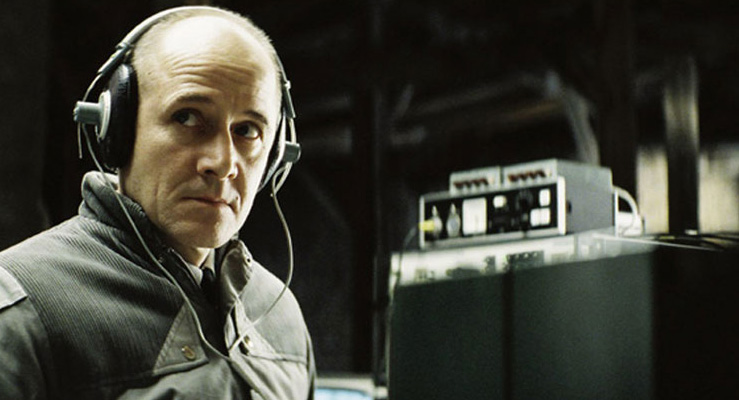
The Life of Others is a German film directed, written and co-produced by the so far unknown Florian Henckel von Donnersmarck. It has all the good qualities of a European film. The script even though it refers to a dramatic historical period the last years before the destruction of the wall at Berlin manages to focus on the lives of few people. It has a slow pace that doesn’t tire the spectator but allows him to really get to know the characters and to think on the issues the film presents. Intense colors are missing from the images emphasizing the harsh living conditions. The framing is carefully done and the whole aesthetics of the film reminds us the photographic art of the past.

The script is very good. A spy of the Stagi is commissioned to spy on a theatrical writer and his girlfriend, an actress. He thinks that they ordered him to do this because the writer has ideas against the government. Soon though he realizes that a minister is in love with the actress and he hopes in this way to get rid of his rival. As time goes by the spy gets more and more involve into the lives of the people he spies. He comes to appreciate their ideas their art and the love they share. Eventually instead of doing his job, he protects them and tries to help them by lying to his superiors.

The film is so thick of ideas that I feel overwhelmed in trying to explain and discuss all of them. Still I’ll make an effort to analyze the one that seem more important to me. In order to be able to discuss this film correctly one would have to see it many times and probably keep notes.

The spy is a man who lives alone isolated by the others without love and without thoughts. He has been trained not to think but only to obey his orders and execute them well. Under these circumstances the first think that gets his attention and sympathy from the people he watches is their love and companionship. In his eyes, their feelings and sincerity worth more that the lust of the minister he is forced to serve. The second think that moves him is art as a way of expression of feelings and thoughts. When the writer plays at his piano the Symphony for a good man and tells that no one who can really hear and appreciate this music can be bad the spy is seduced. In this music he recognizes not only beauty but pure emotion. As his life is completely devoid of beauty and feeling he comes to realize that he has to protect these things.

Moreover, the film demonstrates that a regime of oppression breaks the human spirit. People might still be able to go on with our lives, work, earn money, be comfortable economically but the oppression manages to intrude into their most private sides of their lives, into their thinking and into their feeling. The artists are the ones that are both the most dangerous for a regime of repression and the ones that are the most vulnerable to this system. On one hand by their art they can overrule the regime. On the other hand by being forbidden to have an audience or by being secluded and intimidated they don’t have the psychological strength to produce art. The power of art is immense. It can win people over and it can destabilize the government and change history.

Even if the film is quite emotional it manages to escape the melodrama. Subtle moves and expressions of the actors convey all the intense feelings. I appreciate enormously that the film chose a more ingenious end than the one that was obvious and probably be more emotionally satisfying for the spectators. When the writer discovers that he had been protected by the spy instead of meeting him personally he writes a book about the story and dedicates it to him. At this point the spectators feverishly wish a meeting and a dialogue between those men whose life had been so interconnected. They want the moral and emotional satisfaction that a dialogue between these would insure. Instead the director never presents this meeting on the screen. Instead for going for the easy clean-cut ending he prefers a more insinuating one but a fitting one. The spy chose not only to protect these people for their lives and personalities. He chose to protect them for their potential to create art. This is fairly obvious in his discussion with his superior. His superior presents him with his student’s essay about how artist should be dealt by the regime. He tells him that a period of enforced seclusion without physical torture breaks their spirit. The artist that has been treated in this way when they were set free they never tried to create anything again. This would be the future that would be installed for the writer. The spy when he hears all this he chooses to conceal his true report and create a false one. His best reward, therefore, is this new book of the writer.

Monday, January 08, 2007

The Departed:A promising beggining and a rather dissapointing end


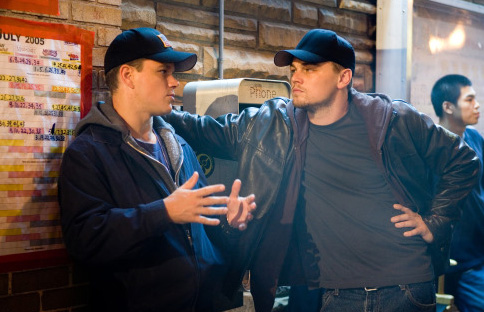
With The Departed Scorsese has return to more familiar ground and has done what he knows best. A story of battle between the gangsters and the police has offered him the opportunity to create an intense film with style, music and intriguing pictures. Based on a script that begins well and ends up as a disappointment Scorsese managed to prove that he is indeed a great director but failed to create a masterpiece.

It is a pity that a promising script ends up a flop. Still the picture has a lot to offer. For one thing great performances. More important though is that in this film you can still understand why Scorsese is considered to be an important director. He takes the interesting ideas and he translates into interesting pictures. Intriguing pictures both intellectually and aesthetically. He presents the paranoia of modern times creating characters edgy, crazy and scenes clear cruel violent. His rhythm is fast and intense. You go through the film with suspense and apprehension. There is intensity in every second and nothing is redundant

Moreover he manages to capture some astonishing performances form his actors. As usually Nicholson is chilling as a paranoid dangerous man. To tell the truth he is more or less stereotypical in roles like this. Matt Damon does also an excellent job. Leonardo DiCaprio has a difficult but really challenging and advantageous role to play. As the under cover cap he plays a man who is always on the edge. He is afraid of being discovered, and being killed. He is forced to kill and commit atrocious acts that both attract and repel him. And most important of all he is afraid that he has lost his identity that no one will ever no who he really is. On the edge and always on the verge of breaking down and going crazy or killing somebody Leonardo DiCaprio manages to give an astonishing performance.

The script contains some intriguing ideas. Two graduates of the police Academy start their career going into the complete different directions. Matt Damon is his superior’s favorite boy. He seems to work hard doing all the right moves. He rents the nice apartment he finds a girlfriend and settles down and he ascends fast. We soon find out however that he is a double agent as he actually works for the head figure (Jack Nicholson) of the gangsters. On the other hand Leonard DiCaprio as soon as he is out the academy he is attacked by his superiors and driven to work undercover. He goes to jail and eventually he hooks up with the head gangster Jack Nicholson. The two men are presented as the opposite sides of the same coin. Both the criminals and the policemen are represented as similar and equal. It seems that only chance and circumstances has made the one group legal and “good” and the other illegal and “evil”. An idea that is emphasized by Nicholson’s little speech in the begging in the film. He says: than in this neighborhood you can either be a cop or criminal, but when you find yourself in front of the gun what difference does it make. The point is that both groups for their own reasons are capable of extreme violence, are capable of killing. As both Leonardo DiCaprio and Mat Damon are pressed by their real employs to find each other out Scorsese emphasizes the fact that one is the counter of the other. Same and different both containing the dark and light elements they chase each other and both fall in love with the same woman. So far the good ideas of the script are fully developed and Scorsese manages to use them well. As the film moves one those intriguing ideas seem to get lost and the film slips to exaggeration, over sentimentality and a supposedly ironic comment ends up as a cliché. As the pressure on both heroes builds up the delicate balance starts to unravel and the killings begin. One by one all of the central characters of the film die. The gangster Nicholson is killed by his own employee-cup. The supervisor of Leonardo DiCaprio is murdered in conflict. Then Leonard DiCaprio himself is killed and then even Mat Damon is discovered and killed. The last image of the film is a rat on a balcony right in front of the illustrious building of the police academy. All in all the conclusion is rather known to us all: even the good guys are not so good any more. They are corrupted and violent as the other side. In the end the film looses the spectator’s faith in it. Over exaggeration and endless meaningless killing brings all the intriguing ideas of the film o a big of nothing.

Wednesday, January 03, 2007

The Queen: a cute but too mild film


Stephen Frears has created a modest but interesting film that lies between fiction and documentary. The Queen refers to the recent past presenting the political and social implications of Princess Diane’s tragic death.
Queen was a risk. The only ones that had a special interest in its story were the Englishmen. Even those, however could be mortally offended by a film that criticized two of the fundamental institutes of the British country: the royal family and the British Government. Queen however rises up to the challenge and manages to create an interesting plot –even for the rest of the world- and describe both the Prime Minister and the Queen with humor and even sympathy. The social impact of Dianne’s death is described well. As the days go by more and more people come to pay their respects to the dead princess. The Queen however, hasn’t realized the mood of her people and considers Dianna’s death and funeral a personal, private matter. The ambitious and newly elected president, on the other hand, seizes the opportunity and taking advantage of the common feeling manages to gain popularity for himself and his party. As a result a crisis between the two head of British country develops. There is a continuous conflict among the Prime Minister and the Queen. The film manages not to take sides in this conflict. It explains the Queens behavior. She is treated as an old lady used to the ethics and customs of another era, unable to understand the modern times. She is the dignified restricted but still human. The Prime Minister even is the representative of a modern government comes to understand and sympathize with the Queen’s behavior and way of thinking. In the end both queen and Prime Minister manage to come to terms with each other and respect on another.
Frears manages to reach this delicate matter with sensitivity and without insulting any body. In my opinion however he presents a rather over optimistic and naïve aspect of the matter. All the characters are viewed in a positive light. The spectator only gets a small drift of the politics involved in the situation and the possible undercurrents and implications. Moreover the peculiar social obsession with the person of Dianne is scarcely explored or explained. The Queen remains a small cute film but too mild to become something more

Tuesday, January 02, 2007

James Bond: Casino Royale : No plot, great style


Some time ago when it was announced that the actor Daniel Craig would be the next to impersonate the historical and popular character of James Bond most funs of the series started a mutiny. Daniel Craig wasn’t sophisticated and sleek enough for them. He didn’t have the appearance of a man of the world, of a gentlemen. On the other hand Craig’s face has many straight and angle lines that express well the hidden possibility of violence. He is ideal therefore for a James Bond not so well trained to the ways of the world, not so well trained to disguise his true nature, the nature of a raw killer. Eventually most fans, having seen the film have to agree that for this James Bond Daniel Craig was an ideal choice.

The James Bond series usually have basically no story but very impressive and stylish scenes. Casino Royal is no exception. In his first mission as 007 he has to compete in Poker with the terrorist Banker and win. The first half the movie builds up to the poker game. Then the rest is about James Bond’s love story with his colleague from the British government. As the action flows in the first half the film is bearable but when the romance starts the script falls form the one cliché on to the other. The fact that James Bond, the notorious womanizer, fells in love is a first for the character and the series. From the begging of the film a suspicious viewer can tell exactly how this romance will develop and end. Supposedly this film and this story is the one that sets and justifies the characteristics of James Bond personality, the fact that he uses women and expects betrayal from their part.

Leaving the plot aside we come to the good parts of a James Bond film: the stylish aesthetics of the film. The first sequence before the titles is surprisingly good. Filmed in black and white, with high contrast and deep shadows reminds us the noir style of the late 40s. The noir style however has a modern clarity with cold tint than couldn’t be achieved with the film equipment of the 40’s. I thought the idea of adopting the noir style for the sequence of the past was quite ingenious. The specific style is well connected in the minds of the educated spectators with the late 40’s and early 50’s and it signifies the particular historical era, when the cold war arose. Lets not forget that James Bond as an agent is truly the product of the particular historical circumstance.

Another astonishing sequence is the one of the chase. This sequence replaced the most spectacular sequences that traditionally set the beginning of the story in the Bond series. Instead of the ludicrous scenes of the land Bonds where the hero used to jump off a cliff and catch the plane, or doing wind surfing on melting icebergs, the scene of the chase manages to be impressive believable and not at all ridiculous. The chased man is done by an athlete specialized in running with acrobatic moves in the city landscape. The fact that he actually does what he is filmed doing makes the sequence seem more realistic and therefore more impressive. The editing in the specific scene is superb creating the intense rhythm that a good chase scene demands. The third impressive element in the film is the titles themselves. Titles also have a long history in the series. They are always highly stylish, long and accompanied by a song that automatically becomes classic. The titles of Casino Royale play with the symbols of the cards. Highly graphic with intense colors, I believe, are probably some of the best titles ever.

All and all for a Bond film Casino Royal is pretty good. Even it practically has no plot aesthetically manages to create an interesting proposal and renew the Bond series. Darker and more realistic than the most Bonds succeeds at surpassing the period of the self parody and ludicrous excess that characterized the Bonds of the 90’s. Casino Royal is definitely not a good film but it is a good Bond film. Have fun!

AFTERNOTE
Check the first sequence in the noir style and the titles...

The Wind that shakes the Barley: A historical melodrama that fails to sustain its inner meaning


The new film of Ken Loach is narrating a part of the history of Irish and British combat. It starts demonstrating the British regime of violence and oppression that eventually pushes the Irish peasants over the limit and drives them into resistance and action. Young boys, farmers are trained by IRA in order to sabotage and kill English soldiers. Killing the others, the Englishmen, is relatively easy for these lads that have been filled with hate and anger after years of mistreatment. Eventually the English army withdraws. A new conflict begins- this time- among the Irish. A civil war is always described as a war between brothers and this is also demonstrated in the Ken Loach film. The two brothers- the main film characters- take the opposite sites and the one is eventually executed by the other.

The story of Ireland has been fairly developed and exposed in film. In these films even a foreigner can read the signs of a very painful history and sense that the scars haven’t faded away yet. The well-directed story of the recent history of Ireland might be a good film by itself for those who have a special interest and emotional connection to the particular historical period (Irish and British) for the rest of the world though something is missing. Everybody knows that a war is a painful situation and that a civil war is even worse. Most of us suspect that in these circumstances right is lost. All sides have their own right. Why do we need another film to state all the same old and familiar truths?

Ken Loach manages to impress on his film all the markings of a good director: beautiful images, careful framing, suspense and good rhythm, emotionality. The film however has a fling for melodrama, and ends up being a little bit vacant. When you watch it you are sufficiently drawn into it but when the film finishes what does remain? Unfortunately nothing lingers. Ken Loach fails to create a film that will take all these well-known and accepted truths and make us see them in a new enhanced light, make us think them over one more time, experience again and acknowledge them from the beginning. It is a pity because these truths are really important and we shouldn’t forget them or take them as given.

Monday, December 11, 2006

Volver


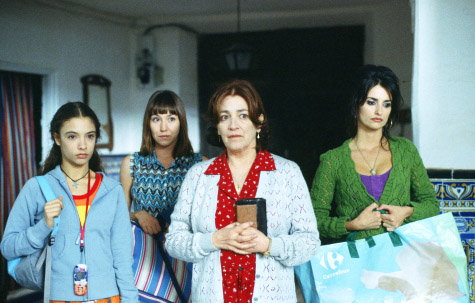
The newest film of Almodovar is called Volver, which means turn back. In this film he uses at the central role one of his favorite actresses, Penelope Cruz. For one more time Almodovar is focusing on women. The central theme of the film is the relationship between mothers and daughters. After her death, the mother returns to resolve the issues she had with one of her daughters. In the mean time her daughter (Penelope) is trying to put her life into order. She tries to hide the body of her lover, who was murdered by her own daughter when he tried to murder her, to earn some money and get on her feet again.

Almodovar always had a flair for soap opera, surreal and kitsch. As the years go by I feel that his aesthetics change into a milder tone. The extravagant and the high tones that accompanied his older films like Kika or the Women on the Verge of a break down have faded away. Strong colors and even glamorous lighting remain as a symbol of the culture of Spain, but the kitsch has definitely departed. Moreover the surrealism and irony of his older films has also mellowed down. Hints of his old sarcasm remain but are not so obvious anymore. In this film for example there is a scene of criticism against the talk shows that are popular on tv these days. A woman who suffers from cancer is invited to talk about he scandals of her village. A hot subject for a tv show since sex and murder is included. When she refuses to reveal her secrets the show woman reminds her that her reward for the shown would be a treatment for cancer at Memorial. The problem is that the more his film become mild and aesthetically pleasing, the more they resemble to a soap opera. His scripts always referred to issues that could well be the central theme of a soap opera: family problems and erotic relationships. Irony and surrealism managed to differentiate his film form the tv-series. His new glossier style has made his films easier to watch and acceptable to many people that were appalled by the extravagance of his old ones. Is this necessarly a minus, though? Why should a worthy film be a difficult film? If Almodovar manages to convey his messages with a milder tone why shouldn’t he?

I enjoyed Volver. I enjoyed the fact that it begins in a surreal, metaphysical way taking us "hostages" in its narration and making us believe at the supernatural only to end up in a completely logic and natural explanation. I like the fact that the film had cleverness in its script. It conveyed clearly the feelings of the people involved in the story, and ends up with a healing touch. On the other hand, I miss some of the sheer audacity that Almodovar demonstrated in the past. If Almodovar could combine the new aesthetic with the irony and surrealism of the past, I personally would be a happier spectator. Volver, however, remains a good and an enjoyable film that is worth seeing.

Monday, December 04, 2006

Babel:a story about communication and understanding


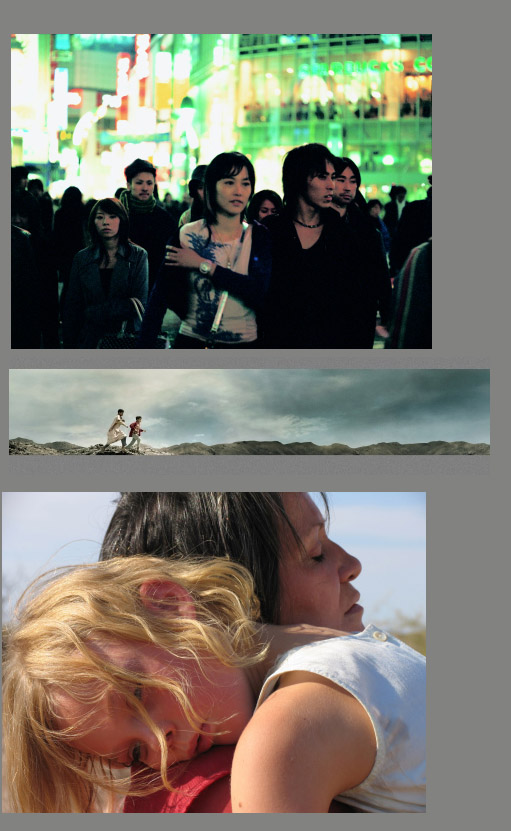
Alejandro González Iñárritu’ s new film has the same style as his other films (Amores Peros, 21grams). Babel his latest film is also the story of a story of intertwined events. A woman-tourist in Morocco is shot. While her husband tries to take her to a hospital and save her life we see in flash back the problems the couple had. Moreover we follow he story of the Mexican nanny of their children who is accused of kidnapping them and is exported back to Mexico and the story of a deaf girl in Japan who lives with her father after her mother committed suicide.

The editing between the three stories is ingenious and has great rhythm and pace. It manages to create tension and anxiety and maintain it throughout the whole film. The film has the personal style and aesthetic of Inarritu. Sharp images that convey the culture and the way of living in four completely different countries, Morocco, Mexico, Japan and United States.

The connection between is rather loose and has no real meaning. The meaning of the film could have been served equally well by three completely separate stories. In all cases Inarittu explores cases of miscommunication and misunderstanding. The couple of Brand Pit and Cate Blanchett have failed to communicate and understand each other after the tragic death of their baby son. They take the trip to Morocco trying to be alone and to re-discover each other but it takes am almost fatal incident (the shooting of the wife) in order for them to be able to really talk and resolve their past issues. The play of the children with the shot gun is mistaken for a terrorist act. As a result the relationships between America and Morocco suffer. The Mexican nanny takes her charges along with her in Mexico for her sons’s wedding. When she tries to cross the borders back to America the border patrol thinks that she has kidnapped the children. Her nephew that drives the car feels threaten and from there and on everything goes downhill. The children are abandoned in the desert, almost dying from thirst and the nanny is deported back to Mexico and is treated as criminal. The initial misunderstanding that leads to destruction in this story takes place in the conversation between the border patrol and the nephew. In the third story a girl is trying to communicate without language. She is deaf and mute. Even in this case the results are not very encouraging. The girl misinterprets human contact with sex. In all cases fear and prejudice uphold communication and understanding. An accident with a gun is thought to be a terrorist act because terrorism is expected from Arabs. The Mexican woman is treated like a suspect at the border and fear leads her to some unwise decisions. Only the children who haven’t learned to be afraid or to be suspicious remain unconcerned and are ready to socialise at the wedding and have one. Only when the police start to go after them do they start to feel that their nanny might not be such a good person after all. The obvious conclusion of the film is that fear and prejudice lead to misunderstanding and even to violence and war. A rather obvious conclusion, wouldn’t you say?

All and all Babel is a well thought film. It has the signs of a true auteur. Inaritu definitely has his own style and his own agenda, which is a good thing. On the other hand, and this is the only complain i have about this film- Inaritu has done this kinf of film again and better. Somehow Babel fails to communicate in an inner level with the spectator. It remains a good film but a rather cold film. A film with great intellect and less feeling.

Thursday, November 09, 2006

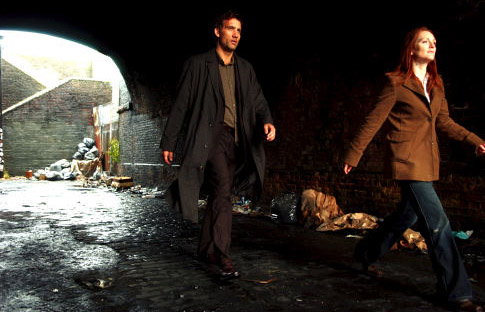
The Children of Man: a great idea became a mediocre film


In the year 2027 the youngest man on the planet is eighteen years old. Scientist can not understand why all women have become sterile. In a society with no hope and no future everything has collapsed. Violence has taken over the entire world. Only Britain stand thanks to a totalitarian government with no humanistic reservations. All refuges are hunted down, closed in concentration camps and eventually exported. Our hero leaves a dull life. Once he had a child and a wife. No the child is dead and the wife is the leader of a terrorist group fighting for the rights of the refugees.

Suddenly the hero is contacted by his wife who asks him to use his connections in order to make some travel card for a girl refugee. While they make their escape plans the wife is killed and the hero is left alone with the girl. At that point the girl reveals to him that she is pregnant and she is trying to keep it secret because she is afraid that they are going to get her baby away from her. In these circumstances the bay is the hope of all people, a flag for political causes a valuable asset.

As usually actors do their job well. Unfortunately Julian Moore is killed at the beginning and the audience is deprived of the presence of one of the best woman actors of our times. Photography is well thought. Grey tones and earth colors rule the images transferring the hopeless and pessimistic feelings of humanity. Directing is more than adequate even it can be said that is doing something really inventive or majestic.

The film starts well with a good idea. The point that children are humankind’s hope is overstated. I don’t think that anyone would argue differently but the film makes a great deal of effort to prove the self proven As the film moves along, it can not resist all the possible connotations that spring into the mind from the image of a young woman with a child. Soon enough she is rendered as Madonna. People stop fighting in order to let her and the baby pass, they cry, they knell and pray. Moreover, the atmosphere in the beginning which is very convincing as dissolute, passive, futuristic in ends up in a religious, melodramatic and superficial episode.

This film had the perquisites to be a futuristic-classic. Along the way though traded some of its most intriguing characteristics for a religious, apocalyptic feeling. In other words it ends up as a typical Hollywood film. All loose ends are tightened, sacrifice is rewarded, and hope is restored. Unfortunately a film that could lead to some inner-thinking and worry and leaves us content and pacified.