Showing posts with label films of 2005-6. Show all posts

Wednesday, July 19, 2006

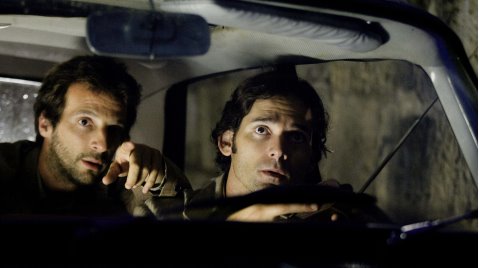
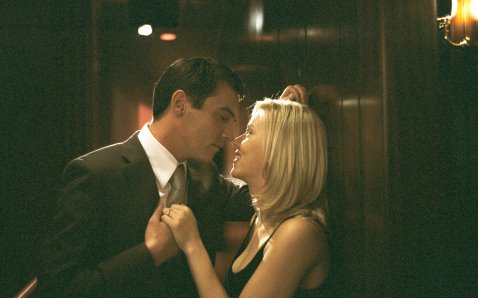
The Inside man, MI3, Xmen , DaVinci Code


After a long absence i come back to share with you my opinion about the last films i saw before the endless void of the summer period.
Just before winter cinemas close and summer one open there is a short period where acceptab;e films come out. some of them are heavily advertised but when they do come out have littel to offer. Best case scenario they would offer an ecxellent dvd night at home with friends.
The Inside man
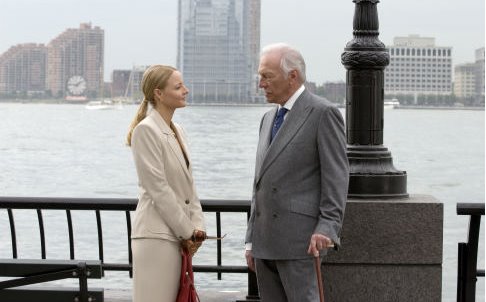
Going from the best to worst I will begin with The Insider. In the long tradition of films describing an ingenious robery Insider has little new to offer. It remains a well written, played and executed film. The clever twist of the story is that the most important role in the plot is not the robbery itself but the question of what the owner of the bank hides in his own deposit box. Jodie Foster -excellent in her role- as always takes on the responsibility to retrieve the mysterious contents managing at the same time to keep this content a secret. Finally we get to see foster in a role worthy of her ability and talent. Even though it is just a small part it is subversive enough to gain the attention of the spectators. Contrary to Hollywood trandition here is a woman dynamic ruthless that even if she is beautifull and attractive manages to play the men's game at equal terms!
The film has good rythm maintaining the suspense untill the very end. Clever scenario, good acting and good directing have managed to create a film that is a great example of what kind cinema Hollywood can offer at its best. Great spectacle that doesn underestimate our intelligence.
X-men: The Last Stand
The most recent film of the Xmen manages to keep up with the standard of the previous films. Even if it is nothing extraordinary it remains a well thought and made action film. The thrid Xmen summarises a circle of episodes that remains as ine of the most beloved one between the funs of the comic series. Jane Grey is reserected as the Dark Phoenix and turns against her friends and lover Scott Sammers. In the end Wolverine-also in love with her- has to kill her in order to stop her. Suprisingly enough for a Holywood film there is no happy ending. Most of the spectator's favorite characters die and remain dead: Scott Sammers, Professor Charles Xavier, Jean Grey. Even if the good guys win and are some optimistic note in the end what is the cost of victory? The film is fairly pessimistic.
Mission Impossible III
Mission Impossible III strats promisingly and ends as mediocracy. In the first scene Mr. Hunt watches his girlfriend being assasinated. The film rewinds to let the spectator know how things got to that point. Therefore as Tom Cruise plays the hero the spectator has a fear that the end wont be a happy one. Action gets louder and louder as the film goes on. Eventually we get back to the first scene where this time we find out that the girlfriend murder was just a ruise. The girlfriend is saved and proven worthy of Hunt's love since she manages to kill some of the bad guys on her own. So far so good. All the educated spectators expected so much. In this point, however, the script overdoes it. Tom Cruise dies and gets back to life. Ok you can sustain you believe but sometimes there is beaking point. When a film surpasses this delicate line the spectator feels manipulated, tricked and eventually dissapointed.
Da Vinci Code
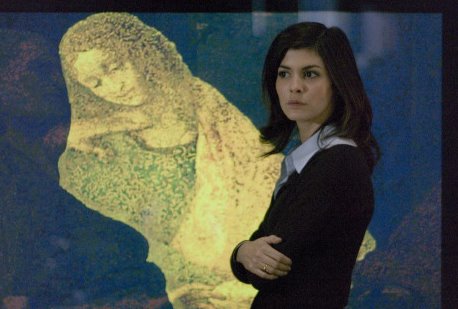
We come to the most advertised film of the period. The big success of the book drove Hollywood to exploit some of that popularity. Ron Howard is director that even hasnt shined has made well some of films that met reasonable success (Cocoon, Runsom, Beauifull Mind). He was a safe choice. The script was an accurate and successful adaptaion of the book since it managed to summarise the plot maintaining some coherence. The actors that were chosen were famous and love by the audience. Tom Hanks might no be one of my personal favorites but he remains a well accomplished one. On the other hand Jean Reno and Audrey Tautou were inspird choices. The film though remains a dissapointment. It has no rythm and doesn't manage to create suspense. Most of the book's action is spiritual and not physical. The book manages to enchant through the boldness of the historical connections and the mystery of the conspiracy theory. The film doesnt manage take advantage of the mysterious atmosphere of the book and downplays the spiritual action in favor of the physical one. In the end a void film results.

Thursday, May 04, 2006

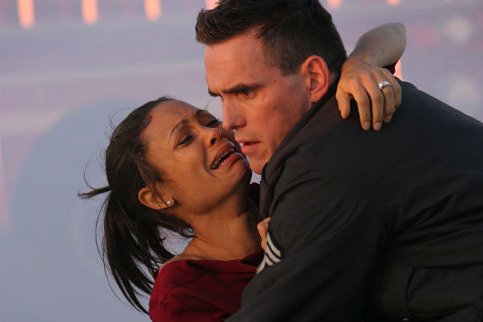
Crash: a film about racism


Crash was the Oscar outsider. When all thought that the Secret of the Brokeback Mountain would get the Oscar of the best movie, the comitee decided to play it safe and 0offer the prize to a more "politically correct" film.
Crash is consisted of several interlaced stories which are discussing the problem of racism in Los Angeles. Stories of violence, murder, hate and suspicion prove that ordinary people with plenty of good character traits can be capable of the worst. Even the most positive character, one who complains against the racistic behaviour of his partner ends up killing a young black boy becouse he is afraid of what he is going to take out of his pocket. On the other hand the most negative character ends up doing something heroic. He ends up saving from a burning car the white woman that he molested sexually the previous reason only beacuse she was married to a black man. The film proves that in a community so multi-cultured as the on in Los Angeles, the rascistic past of America weights heavily. Moreover it insinuates that fear rules every human relationship. The media through their constant report on crimes committed by people not white have managet to create an atmosphere of fear mist trust and suspicion. Eventually it is this atmosphere that gives to birth to more cimes and killings and not racism itself.
Crash is well made film, with good acting and a clever scenario. Its theme is definetely one of the most important problem of our times. It leaves though a scarse hope, light for the future. While the best end up being murderers and corrupted and not one act of mercy and humanity is presented, you end up leving the theatre feeling definetely out hearted. Crash presents a viscious circle with rare chances of break and in the end doest manage to inspire any higher feelings to its spectators.

Tuesday, April 25, 2006

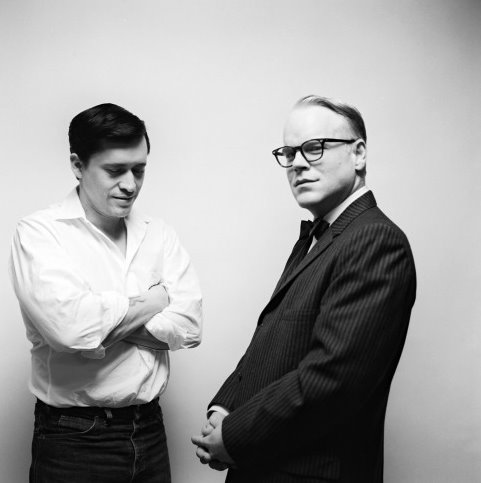
Truman Capote


This is a film about one of the dubious personalities in the art field of the 20th century. Truman Capote managed to write one of the most dramatic boos taking advantage of people and wishing for their execution.
The spectators follow this conflicitve personality through the creation of the whole book. From the start when Capote first got interested in the killings untill the end, the execution of the killers by hanging. Capote sometimes seems to really care for the men that did the atrocious crime trying to find them proper lawyers to defend them and talking to the for hours. Other times he lies to them in order to get the material he desires for his book and wishes they are executed in order to be able to finish his masterpiace. In the end the killers are killed by the state and Capote manages to write one of the most sucessfull books of our era.
The film is well made. The spectator can easily watch it and enjoy. Hoffman manages to convey the special traits of the character he impersonates. Capote was a homosexual, insecure person with plenty of personal problems. Hoffman through hiws way of talking and facial movments proves he studied his hero well and managed to imitate it faithfully. In the whole, however, the film is mediocre, since it has nothing new or ecxeptional to offer.
Eventually, the film raises a question. An artist, a writer always gets his inspiration from the lives of other people. In some way, exploits their feelings and experiences in order to create something great, a piece of art. In Capote's case this expoitation is explicit while in most cases the spectators do not realise it.Up to what a point is this expoitation justyfiable?

Friday, March 31, 2006

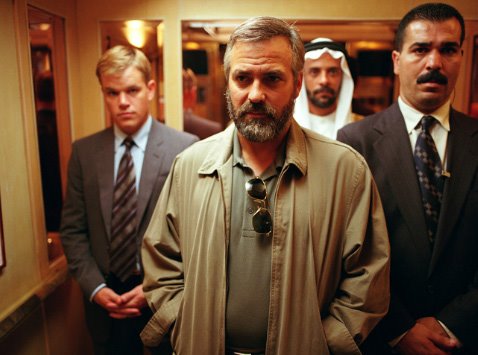
Syrianna: a political comment on contemporary American reality


Syriana is a political thriller about things we strongly suspect. For the Americans this film can be a shock but for Europeans the inter-relations of politics and companies that handle petrol distribution is an old secret. Three different stories are narrated. From one hand, we follow the story of an agent, an assassinator- to be exact- of the United States. On the other hand there is a member of an important petrol company who tries to negotiate a big deal with an Arab Prince about the petrol production of his country. The third story is about a lawyer who is investigating in order to find out if a small company managed to close a deal through unjust means. All theses stories collide at the end of the film with the assassination of the enlighten Arab Prince by the USA Government. Corruption is presented in every level. The government abandons its assassinator when he is exposed. The lawyer covers up the foul playing he encounters. Big companies manage to ensure who will ascend next to the Arabian throne. In this chaos Americans act against Americans and nobody knows what the others do. In the end the situation is not beneficial even for the American state.
The story is quite complex and the spectator cant follow the thread of the three stories easily. In the better part of the film he tries to orientate and find out in which country he is and what the political situation the film describes is. The film is fictional but remains so close to reality that has a documentary ring to it. You have the strong feeling that the things it describes have actually happened.
In the end Syriana is a clever political comment which has nothing new to offer to the European audience. However, it might be an insight of Americans foreign politics for the country's audience. As a film, though, it lacks coherence, clarity and inner meaning. The great acting form Clooney and the intelligent subject manage just to save the movie and place in meritocracy.

Friday, March 24, 2006

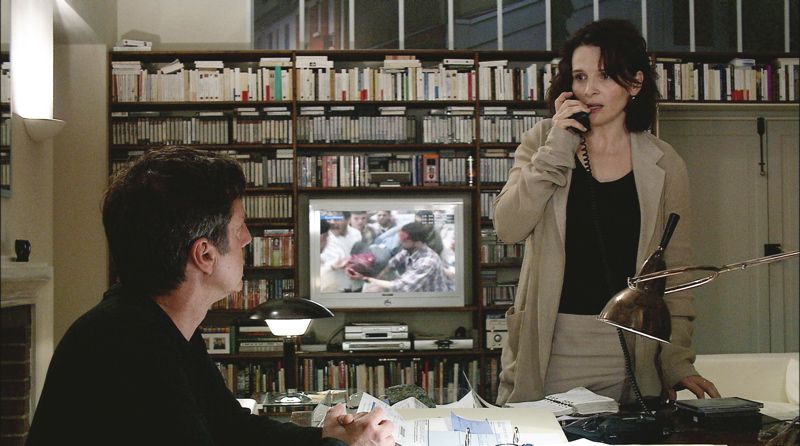
Cache: The Hidden- An anigmatic film


I consciously let some time to pass by before attempting to write a review on this french film. Firstly it is hard to decide whether i liked the film or not. Then it is even harder to try and explain it. A completely confusing piece of filmaking.
Haneke is a director with interesting past. A director whos is considered a good example of the European cinema. In the film he selected a group of ecxellent actors, Daniel Auteuil, Juliette Binoche who manage to capture the audience through their ecxellent acting. The film presents an upper class family who suddenly starts recieveing videotapes that have recorded their house and part of their everyday lives. along with the tapes come childish drawings which represent a hurt boy. The husband begins to suspect that the tapes and drawings are sent by an algerian boy that his parents wanted to adopt. He as a boy had managed to prevent the adoption by lying and deceiving his parents. As the movie moves along we meet the situation gets more and more complex. In the end we never learn who actually sen those tapes and why.
Cache is definetely a weel educated film on the art of cinema. The spectator finds it difficult to tell apart the scenes that are part of the tapes and the scenes that are from the actual film. The element of scopophilic value of the cinema is well documented and explored.
I think that the director is trying to make a point on how people are scarred by their infantile fears and actions. The hero has lied as a boy because he didnt want to share his parents love and affection. It is not a criminal act. The hero though is gonverned by shame for his action and he immediately considers the terrorism that has embarked upon his life as a punishment for his infantile actions. Some people have the tedency to easily discard their child- misdeamors as actions of no consequence since they didnt know better. For others this absolution is impossible. they remember themselves distingly as people completely formed. The time they did these things as children they knew they did wrong. therefore they can not stop feeling ashamed and carry the burden in their minds. Westerns society considers children pure and inoccent. Childern however can be as good or mean or as complex as grown people.
In Haneke's film Daniel Auteiul is man who got educated enough to know that he is truly responsible for denying another child a chance to better education and life. He however cancelled a chance. He didnt form the other's man life completely. His guilt and behavior leads the situation to extremes. and by giving so much weight on this his whole family is tested and fractured by a crisis he himself created.
The film ends and nothing is clear. No one knows who taped them. The spectators dont know what will happen from here on. An open ending, an anigma.

Wednesday, March 01, 2006

Brokeback Mountain: Not a typical Western


Brokeback Mountain was advertised as probably the best film of the year. The main theme of the film, which was homosexuality, was under-played and the film was advertised as the description of a forbidden romantic love. In this way a theme that could easily shock the conservatives found itself in the mainstream cinema.

Two young cowboys take a harsh summer job. They have to take care of a herd of sheep up in the mountains without getting in contact with other people for a month. Living alone in nature, under harsh conditions, they become close friends and eventually lovers. When the summer job ends they part and get married. They, however, remain in touch and arrange fishing-trips in order to be able to see each other and make love. As the years go by their reunions are becoming harder and harder to organize and their secret leaks out.

The film is well thought a directed. The scenery plays its own part to the film. Both actors play exquisitely. Small facial expressions create whole moods. Few words are aired but their feelings are obvious.

Only a non American director would dare to go against the strong tradition of the western. In American Culture West was always considered as a place of harsh but beautiful environment where “real” men can battle against nature and themselves in order to prove their manhood. A cowboy had all the paraphernalia a tough man needs. He is a loner, crude partly civilized, a man carrying always the phallic symbol, his riffle, or his gun. In Ang Lee’s film irony runs strong for those who know the stereotypes of a typical American Western. The beautiful and harsh environment testing the men is present through-out the film. The men are loners, typical cowboys with their riffles and beans. Beside their toughness they are homosexuals. In America of the 50’s and 60’s homosexuality was the considered a threat to nuclear family and therefore a threat to America itself. In other words being homosexual you were an enemy of the state only a step higher than the communist. It is hard to overcome ideas that have such an old root. In Lee’s film both men manage to create a family that is dysfunctional. Through the film we realize that these people are condemned to loneliness and isolation. It doesn’t matter if their secret is revealed or not. No being able to communicate their deeper wishes they are condemned to a life without sentimental connection. When one of them dies, the other has not even their brief encounters as a small compensation for the complete destruction of his life. The film presents homosexuality as a destructive and addictive passion, like cards, alcohol or drugs. Because of their homosexuality these men can not be happy, can not fit in society. They ruin their families. One of them at least keeps loosing his jobs and ends up economically ruined. He had been afraid of being outcaste if he was exposed, and he ends up living outside society anyway.

Homosexuality is still a sensitive matter. Lee tries to handle it with care. He declares that homosexuality can be based on love, on a real sentimental connection. It is not only a sexual passion. On the other hand it is presented as a curse. As if being a homosexual refrains someone form functioning as a normal member of society. In the end the film manages make he spectators sympathize with the heroes. In the same time, though, I think that it takes away some of the respect that is due to these people. We might feel sorry for them, but can we appreciate them?

Monday, February 27, 2006

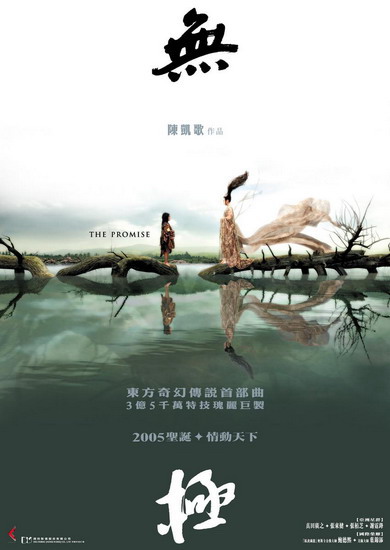
Promise: A beautiful fairy tale but what else?


Promise is a Chinese fairytale that has all the ideas and images a western expects from a Chinese myth. A poor girl is offered a chance from a goddess. She is offered the chance to be the most beautiful woman of the world and to attain fame and riches. In return everyone she will love will lose to death. The girl takes up the offer only to regret it, when she is old. Her lover manages to turn back time and offer her the opportunity to choose again her destiny.

If the spectator accepts from the beginning the fact that he watches a fairy tale and suspends his disbelief he will be able to enjoy the beautiful symbolic images that the film offers. For example the girl when is captured by the evil duke is kept in a golden bid cage and is dressed in white feathers. Another astounding idea and image is the one of the slave of the duke. A man captured and forced to serve in exchange for his live. He wears a cape made of black feathers which keeps his severely injured body alive. When he gives up the cape his body bursts up in flames.

Promise is a film that is definitely well thought aesthetically. Every scene is a beautiful painting, colorful and magic. On the other hand, it has no meaning, no soul. It doest manage to move the spectator.

According to Chinese Philosophy ever person has a destiny, a fate that he can not change. He can, though, make different choices. He can’t change his fate all together and be something completely different but he is offered some important choices. Making though a choice and committing to a path means that he has to face the consequences of his choice. He cant evade them. Promise is a film that supports this idea. And it is a fairy tale because it offers her heroine a second chance in order for her to reconsider her choice since through time she gained the knowledge of her own future. A second chance that few of us get in real life.

Tuesday, February 21, 2006

Munich: Keep Spielberg away from politics


Growing up Spielberg was my favorite director. Every year waited anxiously his film, expecting to be enchanted by his amazingly executed fairytales. E.T., Indiana Jones, Close Encounters of the third type was the bed time stories of a generation and the fun time of the adults. Spielberg was always a master –technician with flair on the fantastic.

In the recent years, however, Spielberg, unfortunately –at least on my opinion- decided to grow up and do adult films with political messages. His “serious” career kicked off with Schindler's List, moved on to Amistad and Saving Private Ryan, ending to Munich. All these films were perfectly executed showing mastery in the art of directing and an excellent following of the golden rules of Hollywood mainstream films. Adventure, romance, suspense, tension and quick rhythm mixed up together in order to create films that easily and pleasantly watched. After though the two hours of enjoyment, what else do they have to offer? Their subjects are highly political, and supposedly have an important humanitarian message for the spectators. In Munich’s case the “deep” message is that violence brings more violence. The message is well known, politically correct and is repeated over and over through the film. Art should have a deeper meaning. In Spielberg films though, the deeper meaning is there on the surface, repeated often enough and obvious enough so that even the densest spectator can not miss it. And then it is always over dramatized and over simplified so that no arguments against could be made. Spielberg has no ability to see all the shades of gray that exist between the black and white opposites in political situations. His characters are always positive clean cut heroes. The assassins are presented as people with families, ethic. Every time they have to commit a murder they try to make sure that no innocents are killed. They suffer for every bullet they throw and wonder if their executions have helped to make the world a better place. The over dramatization of the murder of the Munich athletes creates a counter effect eventually. All have recognized that the athletes were innocents and there was no justification for their deaths. The way, though, Spielberg uses the scenes of their assassination and his effort to present them as martyrs, transforms the film to propaganda and provides a sided view of the whole political situation. In this film the isolated incident is presented without referring at all to the facts that led to this terrorist act. In this light we tend to forget that these nations have long since been in war and bloodshed.

I can still admire Spielberg for his exquisite mastery on the technical side of directing. As an auteur however, he has not the necessary qualifications. He is not intellectual enough to handle delicate issues of politics. My advice to him would be to abandon his aspirations for great heavy adult films and return to his fairy tales for children. His simplistic view of life fits perfectly children’s entertainment. Besides entertaining children and capturing their imagination is not a lesser nor a smaller goal for the art of cinema.

Tuesday, February 14, 2006

Match Point: Woody Allen asks one of the biggest philosophical questions


Woody Allen has a long career both as a film director and actor. He has managed to create his own unique style and create movies that have gained him a spot in the film-history. He is famous for his intellectual comedies which criticized erotic relationships. In this film, though he abandons his favorite style, the erotic comedy, and his natural environment, Manhattan, to make a dramatic film placed at London.
An Irish tennis player manages to marry into money. Thanks to his father in law he climbs the social ladder rapidly gaining a well-paid work in the business world and a life-style fit for a class that has assimilated wealth through several generations. He makes though, a fatal mistake. He fell in love with his brother-in –law girlfriend and starts an illicit relationship. When his mistress threatens to tell his wife, he murders her in order to be able to keep his job and social status.
Woody Allen has done an incredibly suitable casting. Great actors give great performances. The spectator understands the kind of life that tempts the hero to murder. In this case luxury and wealth are the means not for over consumption and vulgarity but the way to insure a higher way of living by having access and enjoying higher art. Opera, music, theatre, refined taste in food and clothing are the motives that push the hero to murder. Contrary to the mass believes that wealth can provide the privileged ones with a better car, a luxurious house and maybe a boat, Allen’s hero pursuits more spiritual goods.
In reality Match Point is the re-working of an older Woody Allen film, Crimes and Misdemeanors. In Crime and Misdemeanors a middle aged man hires a professional assassin to kill his mistress. He lives in terror waiting to be discovered and punished for his crime until he realizes that nothing is going to happen and goes back to his life. Both films are actually philosophical analyses. The question asked is whether there is higher power or not. If there is no god and no higher justice then what stops from committing a crime? If we actually believe that there is no justice in the world than we can do whatever we want and get away with it. If there is no fate, all we have to be is lucky. In both films the killers are never punished. On the contrary after their deed they manage to remain guilt-free, happy and to prospect economically and socially. So what does Woody Allen tell us? That there is no God and we are free to conduct ourselves as we wish? If that was true though, we would live in a world without restrain, a world full of crimes and violence. But then again we already live in a violent world don’t’ we? The choice to believe or not to believe is personal. If you don’t believe you are free to choose your morality. In the end living by a moral code is also a personal choice.

Tuesday, January 24, 2006

Goodnight and Good luck: A wake up call for America


I don’t do politics. Sometimes, though, films do and then I follow them up. George Clooney, the charming ex-doctor of the ER made a thinking film proving he is more than a pretty face.
The film refers to the dark era of McCarthy. The senator has started his crusade against the communists spreading fear and a feeling of oppression to the whole America. A tv journalist decides to make a stand against him and prove that his politics go against human rights and demolish freedom of speech. The film ends with a critique of the way the press works in contemporary America. In this film individual characters do not matter as much as the description of the atmosphere of the era and the political circumstances. We rarely follow the reporters after work at home and we know little of their personal lives and characters. The film presents the studio as their natural environment and seeks to describe all the careful maneuvers they have to execute in order to be able to do show on the senator McCarthy and escape with their hides. The film is a collection of episodes bond together by singing numbers. The structure therefore resembles a documentary and not fiction.
George Clooney kept for himself the second role no the leading one and that is much in favor of him. He is the quite supportive helper of the main journalist. His role gave them the opportunity to be present on the most of the scenes but to go unnoticed. All actors did their work well. Critical was Clooney’s to keep the film black and white. It adds to it a realistic tone and represents even better the aesthetic of the era. Moreover in this way the documentary material, the interviews and the newsreel of the times blend much better in this way.
Clooney has managed to create an acute comment on the politics of today. He hints that the USA government uses the justification of the war against Terrorism for ignoring human rights and exerting over control on its citizens. McCarthy exploited Americas’ and the rest of the world’s fear of communism to demolish the basic right and values of democracy. In the McCarthy era though, there were journalists and studios that had the guts to stand against this. Clooney’s film concludes that today the media is so corrupted by big companies economic interests that choose to go along with the official politics and cover up the truth.

Friday, January 13, 2006

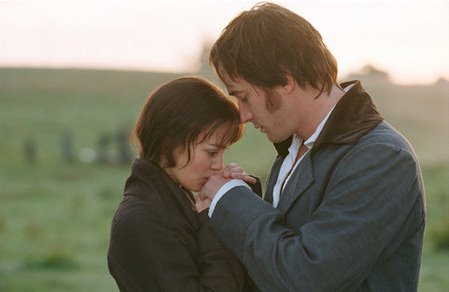
Pride and Prejudice: Victorian Romance back o the screen


The most famous novel of Jane Austin has found itself on the screen again. BBC’s six hour long version is probably the best adaptation. It had the great advantage of being long enough to be faithful to the book and to include all the details that elevate Jane Austin’s work to a masterpiece. Therefore the new Pride and Prejudice version of Joe Wright is hard to stand up to this comparison.
The main flaw of the film is that it is too short and the script isn’t coherent enough. Everything moves too fast and spectators who haven’t read the book will have difficulty in understanding what is going on. The ones that are funs of the book, however, will have the feeling that they are scanning rapidly through the pages of the book reading only their favorite parts. In the end they are left with a feeling of discontent. On the other hand the film has enough good points. Firstly the casting is excellent. Both Elizabeth Bennet and Mr Darcy look as they are described in the book. Jane Austin’s great plus was her ability to create vivid characters that one could easily fathom through their actions and most importantly through their words. These characters emerge well enough in the film with all their humor, charms and vices. Moreover, the atmosphere of the book is also well conveyed to the film. An era where women were socially destined to marry with all its positives and minus is well presented. The beautiful English landscape has given the opportunity for great photography.
On the whole the film remains mediocre, made in order to satisfy our need for romance which awakes form time to time. My opinion though is that if you have an urge for a Victorian story you should rent the BBC version and watch it by the fireplace. Winter landscape is perfect for this kind of escape.

Wednesday, January 11, 2006

The Brothers Grimm: a gothic, comic, parody of the tales of Grimms


Terry Gilliam is a director with excellent past with films like the Twelve Monkeys, Brazil, Fear and Loathing in Las Vegas. Even his less successful efforts have touched some soft spot in me and remain in my heart. The Adventures of Baron Munchausen even in truth a mediocre film has filled my childhood with fantastic, absurd and even surrealistic images.
In the same way The Brothers Grimm might not have received enthusiastic reviews, and wouldn’t hold much under strict examination still manages to stimulate our imagination with pictures deliciously stylized and fantastic. The script refers to Brothers Grimm, known to us as the writers of some of the popular fairy-tales. The Brothers in the film are not respected writers but small time crooks who supposedly fight curses and witches. They themselves stage the supernatural phenomena that later on are paid from the superstitious villagers to battle against. Eventually they are captured by the French army and are forced to confront a real curse and a real witch for the first time of their lives. Many elements of the tales that were written by the real Brothers Grimm have found their way into the script. The small part played by Monica Bellucci conveys a whole meaning of evil in the film history. Surprising evil in this case is extremely beautiful, ripe, enchanting and seductive. Usually evil characters in films are deformed, ugly and monstrous. Even in the fairy tale history for the first time the question “mirror, mirror on the wall who’s the fairest of them all? can true fully be answered: “you are” As the evil queen Monica Bellucci is presented even more beautiful than the positive character (the Snow-white?) Angelika. The script isn’t the most original neither the most coherent one. The spectator has to suspend temporarily his questions and go with the flow, in order to be able to enjoy the film. Acting is a little bit overdone as sometimes is done in film-parodies. There are elements of gothic atmosphere, parody and comedy. In the whole, one could say that the film is uneven. There are instances of brilliance and moments of indifference. Still the film has managed to awaken my imagination and leave some pictures at the store of my mind.

Monday, January 09, 2006

Corpse Bride


I was really looking forward to Tim Burton’s newest film. His similar project Nightmare before Christmas had really enchanted me. The Corpse Bride has all the elements to be a perfect little diamond and still something is lacking. Over expectation sometimes can ruin even the best film I suppose. Sometimes I wish I had never seen the trailer of a film. All the surprising aesthetic of the stop-animation technique was in the trailer to be consumed over and over. My eyes and brain got accustomed to it and when I finally got to see the film …..it was everything that I expected but nothing more.
Let’s try though to see the film in a more subjective way. The story of a young man who is preparing for a wedding with a lady he loves and by unfortunate circumstances ends up married to dead cursed bride was the perfect match for the stop-animation technique. Gothic, imaginative and romantic enough to create a kind of film that Burton does best. The upper world is presented without much color in grayscale. The world of the dead though is full of color and style. This inversion where the dead are more free, vivid and colorful than the living is indeed a clever thought. Clever idea is also the worm that inhabits bride’s skull and speaks as the voice of her conscience. All these dead-characters remain more positive and sympathetic than the living ones through out the film. There are also enough references to other films. The hand coming out of the grave reminding us of Carrie and the skeleton in the musical number of the dead could easily be the introductory character from Cabaret.
Analyzing the film one has to admit that the directing is more than efficient, the acting is great, the music is good, the script is imaginative and the aesthetic is interesting. However in the end the image that stays with us is the particularity of the technique which characterizes and marks the whole film. Corpse Bride beside being a well made experiment, is a still typical cartoon. The skeleton story would never be chosen by the all too clean-cut, cute and happy Disney. On the other hand the script is handled too much like a Disney cartoon. The images remain mild, there are musical numbers and all the characters sing and dance. Little cute pets have been transformed into a skeleton-dog, a worm and a spider but are still there. It seems that both audience and spectators are expecting very specific things form a cartoon. I can appreciate that Burton parodies these expectations in a way in his film but I wish that instead of parody he would drift further away from the usual form of the cartoons.

P.S.
Do check the flash version of the Corpse Bride site! It is delicious!!http://corpsebridemovie.warnerbros.com/

Wednesday, December 28, 2005

The Chronicles of Narnia: The Lion, the Witch and the Wardrobe


After the big success of the trilogy of the Ring and the Harry Potter series it was only expectable that someone would remember the Chronicles of Narnia. The book series written by C.S. Lewis is an old children’s book which had its own funs. It describes the adventures of a party of children who travel to another dimension and get to know a different world, Narnia. In this world there are no humans, only animals that speak, and others creatures as centaurs, nymphs and fawns. The god and creator of this world is a lion called Aslan. In this episode the children are forced to fight an evil witch who put Narnia under a spell of eternal winter without Christmas. This episode is not the first episode of the chronicle but it is the first written by Lewis and probably the best of the series.
The script is quite faithful to the book well adjusted to the needs of a movie. Special effects are used extensively in order to bring to life all the mythical creatures and the world of Lewis. However this is a film for children as is the book. When you have surpassed the first twelve or thirteen years of your life the Narnia Chronicles can not carry you away anymore. You can still appreciate the complex imagination and the beauty of the world of Narnia. In the same way the film is mostly referred to children. It lacks the innovation in the aesthetics, the mastery of directing that would help lift you with the spirit of the fairy tale. As a matter a fact the colors and the images derive directly from a bbc series of Narnia done for tv. The scene of the final battle especially is a copy of the tv episode. More over the influence of the images that decorate the book pages is quite obvious. A good example of the imitation of these images is the entrance to the Queen’s palace.
When a book is translated into film, spectators aspect the film to respect its origins and to be faithful to the spirit of the original writer. On the other hand in order for the film to be a separate work of art has to move beyond the book, has to make its own aesthetic suggestions and add new elements to the myth. Andrew Adamson has failed to do this in his movie. In a way this is as disappointing as changing the book completely. Therefore The Lion, the Witch and the Wardrobe even though pleasant to watch remains a mediocre film without great aspirations.

Tuesday, December 27, 2005

Λούφα και Παραλλαγή: Σειρήνες στο Αιγαίο

Βλέποντας την προηγούμενη Λούφα και Παραλλαγή και το φετινό έργο προκύπτει το αυτονόητο ερώτημα τι έπαθε ο Περάκης όταν έκανε τη θητεία του και έχει τέτοια εμμονή με τον στρατό; Όταν έφτιαξε το πρώτο έργο θα πρέπει να ήταν χρονικά κοντά στη δική του θητεία, είκοσι όμως χρόνια μετά πως είναι δυνατόν να γνωρίζει πως είναι να υπηρετείς στα νησιά και στις βραχονησίδες; Το περίεργο είναι ότι η στρατιωτική θητεία πράγματι είναι κάπως όπως την παρουσιάζει ο Περάκης. Με καταγωγή από την Κω, όπου κάθε καλοκαίρι έβλεπα τους φαντάρους να εξασκούν το ευγενές άθλημα του καμακιού σε ανεξαρτήτως εθνικότητας γυναίκες και με πολλούς άνδρες φίλους που ήδη έχουν κάνει τη θητεία τους και μου έχουν διηγηθεί άπειρες φορές τα ίδια ξανά και ξανά ανέκδοτα από τη καθημερινή τους ζωή στο στρατό μπορώ να πω ότι ο στρατός στην Κω φαίνεται να λειτουργεί όπως παρουσιάζεται στο Λούφα και Παραλλαγή.
Ο Περάκης με το έργο αυτό κατορθώνει πετυχημένα να σατιρίσει το στρατό, την ελληνική πολιτεία, τους δημοσιογράφους και φυσικά τις ελληνοτουρκικές σχέσεις. Μέσα σε έναν παραλογισμό όπου κανείς δεν μπορεί να συνεννοηθεί με κανένα χάρη στο χαλασμένο ασύρματο και στα κινητά που άλλοτε δεν έχουν σήμα και άλλοτε δεν έχουν μπαταρία, ευδοκιμούν οι δημοσιογράφοι που ελπίζουν η ελληνοτουρκική διένεξη να οξυνθεί για να βγάλουν λαβράκι. Και ένα κοινό για όλους μας μυστικό ....κανείς δεν θέλει πόλεμο γιατί οι αναταραχές βλάπτουν το τουρισμό, το κατεξοχήν δικό μας έσοδο αλλά και της Τουρκίας πλέον.
Τα έργα, κινηματογραφικά και λογοτεχνικά, που κατορθώνουν να συνοψίσουν με επιτυχημένο τρόπο τους κοινούς τόπους μια εποχής και κοινωνίας γίνονται αυτόματα δημοφιλή. Αυτό συμβαίνει και στην προκείμένη περίπτωση. Τα αστεία του Περάκη είναι επιτυχημένα γιατί μας είναι ήδη οικέια.. Όσοι έχουν κάνει στρατό τα γνωρίζουν από πρώτο χέρι και μας τα έχουν διηγηθεί. Όσο για τα πολλά αστεία που προκύπτουν από την αβανταδόρικη φιγούρα του Κρητικού τριγυρίζουν στην Ελλάδα εδώ και χρόνια. Τα όπλα και το καλλιεργημένο χασίσι είναι δύο από τα μοντέρνα χαρακτηριστικά της Κρήτης. Ο Περάκης λοιπόν, παίρνει τα κοινωνικά και πολιτικά σχόλια της παρέας στο καφενείο και μας τα προσφέρει πιο ολοκληρωμένα και μεγαλύτερη αίσθηση του χιούμορ.
Η Λούφα και Παραλλαγή τελικά είναι μια έξυπνη σάτιρα με ερμηνείες που πραγματικά στηρίζουν το σενάριο και το κάνουν πιο απολαυστικό. Περνάς καλά όταν την βλέπεις και έχεις την αίσθηση ότι καλά πέρασαν και αυτοί που την έφτιαχναν. Η ταινία αυτή μοιάζει εφήμερη ταιριάζει στο εδώ και στο τώρα και στην ιστορία θα μείνει σαν μια καλή περιγραφή μια προσωρινής (;) κατάστασης. Σε 20 χρόνια άραγε θα αναγνωρίζουμε τα αστεία της και θα γελάμε ακόμα; Εάν η άμεση απάντηση σας είναι πως μάλλον όχι, σκεφτείτε το καλύτερα. Εξάλλου ακόμα και οι νεότερες γενιές στρατιωτών ταυτίζονται με τη Λούφα και Παραλλαγή της Χούντας. Φαίνεται πως μερικά πράγματα αλλάζουν με απελπιστικά αργούς ρυθμούς.

Sympathy for Lady Vengeance


After the Old Boy which became quite popular Chan-wook Park comes back with the third and last part of his trilogy on vengeance. The story is about a young girl who helps an English-teacher to abduct a small boy. When the teacher kills the boy the girl is forced through extortion to confess a crime that she didn’t’ commit and stay in prison for thirteen years. During that time she deeply regrets her actions, she helps all her fellow prisoners and plans a scheme of great revenge.
Lady Vengeance is actually a dark Ameli. An ingenious young girl helps or punishes her fellow prisoners in a way that conveys a sense of humor. The editing can be a little chaotic especially in the first part of the movie where extensive flash-backs narrate the incidents that bonded her with her cellmates. The violence of the film is quite real and brutal and there are images that a West-culture viewer is rarely accustomed to. On the other hand these images have an aesthetic form that makes them in a strange way beautiful.
The whole film is about taking law into your own hands. In the beginning of the film the heroes is accused of a terrible crime and can be really antipathetic to the audience. In the end though the spectators have come to like this girl who has committed a abduction when she was too young to know better and a murder in prison which is considered justifiable because of the morally monstrous character of the victim. In the same way the film makes sure to have completely disgust the audience of the English- teacher. He is presented as a man who systematically abuses and rapes his wife, a serial killer of young children, a real sadist. When the parents of the dead children mutilate him, torture him and finally kill him the audience is 100% with them. But is extreme violence and brutality really justified even when it is used against a human-monster? A beautifully made film with a moral question.

P.S.
Check the site of the movie as stylish as the film http://www.geum-ja.co.kr/

Friday, December 09, 2005

The Three Burials of Melquiades Estrada: A different western


Tommy Lee Jones first attempt at directing was surprisingly successful. With this film the western genre, long forgotten, has revived. Even though his directing lacks the atmosphere and the marks of someone who has managed to create his personal style, Tommy Lee Jones chose an interesting script with real characters and managed to serve it well. Let’s hope that his new career will prove to be as interesting as this film.
A Mexican illegal refugee lives and works in America. One of the border guards kills him. His friend played by Tommy lee Jones, himself, unburies him and transports him back to Mexico in order to burry him at his own country with his people. Moreover, he forces his killer to follow and carry the corpse. The film is divided into two parts. In the first part the spectators are fed with all the background stories of the main characters. The second describes the trip to Mexico.
The Western genre has a long tradition in the American film Industry. It always presents the fear of the Americans for the Other (Indians, Mexicans) since their stories are situated near the borders. In a typical western the main character is a loner who has a moral code of his own. On the other hand westerns are usually placed in a semi-civilized environment where human life is vaguely appreciated and cherished.
The three Burials of Melquiades Estrada follows some of the western rules. It is also placed in the border land. The central character is truly an idealistic loner. On the other hand the film presents a unique respect for the human life. Not only the main character but all the persons that appear in the film refuse to kill ao let die a man. In the contemporary world where everyday violence and death rule it is syprisigly to encounter a film with such strong feeling on the value of human life.
In the film there are several instances where the respect to life is demonstrated. When justice is not served and the border guard escapes with murder, the protagonist begins a journey of vengeance. In the end, though, he doesn’t kill the border guard. He is satisfied when the guard realizes the full weight of taking the life of another and asks forgiveness. An old man who lives alone in the wilderness asks the heroes to be killed. They however refuse to kill him. In return the old man doesn’t betray the runaways even though they didn’t grant him his wish. The policeman never takes his free shot even though he has every lawful justification to kill the hero. The Mexican passerby, the one who takes money in order to help the refugees to pass the border (not a man of great moral stand) gives up his job in order to help some unknown gringo and save his life. The Mexican girl heals the guard who beat her and broke her nose. She saves his life and accepts him to sit and work by her side.
The three burials of Melquiades Estrada is an optimistic film to the core. It talks about friendship beyond racism and even beyond death. It talks about the value of life in a borderland where usually the people on the other side of the border are not thought as exactly human. And all of these take place in contemporary Texas in the American State where the death penalty still exists! The optimism and the naivety of the film amaze me. But then again Tommy lee Jones talks about the how things should be not how they are and teaches us the outmost respect. In a world full of wearth and anger his protagonists insire peace. Good for him!

Friday, December 02, 2005

Harry Potter and The Goblet of Fire: a well-made film right on the pre-Christmans period


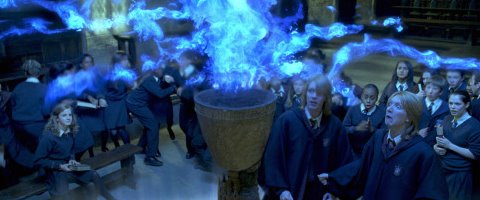
The film I saw this week on cinema was the fourth episode of the Harry Potter series (time does fly!) The Goblet of Fire truly is a Hollywood blockbuster film exploiting the popularity of Rowling's books. Even though it is very well made with good acting and directing, photography as most of Hollywood films has really nothing to offer beside the momentary pleasure of watching it. The script in spite of the book’s length is a quite good adaptation including all the main points of the plot and managing to remain consistent. There is adventure, romance, mystery, suspense all the ingredients of an old tested but successful recipe. Besides of it’s clichés- the presentation of teenage love or the relationship between men and women- it remains a pleasant film that is easily watched and enjoyed. Since we have already entered into the Christmas spirit I would say that it is a most suitable film for this period of the year.

Thursday, November 10, 2005

Flight plan: Cliché Images and Scenario, Conservative Ideas, Hollywood at its Usual Self


There are some movies that are better seen on dvd with friends and pizza. Their great advantage is that even if you miss something while you are talking with your friends or eating your pizza it doesn’t matter because you still get the picture of what is happening.
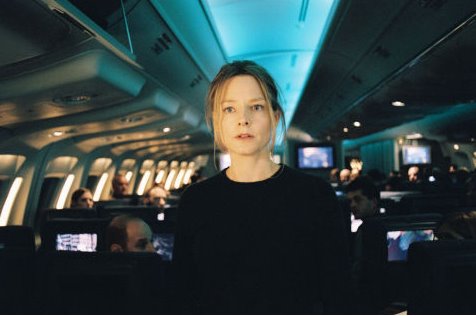
Flight plan is one of those films. To be honest with you I went to see it because I had the right of free entrance. Then I though that since Jodie Foster is in the leading role it couldn’t be too bad. Well it wasn’t bad it was just the absolute mediocre Hollywood- adventure film where you get exactly what you were expecting. Good even though not exceptional acting, sufferable script, good but not surprising directing and perfect photography and lighting but completely without any personality. The film actually reminds of something else you have seen in the past. In this case it is more or less the same scenario with the Panic Room. The similarities between the two films are painfully obvious. Jodie Foster in both films playing a single determined and quite tough mother who is struggling to protect her daughter. Close spaces and tight rooms to enhance the supposed feeling of anxiety of the spectator. A twist in the script to keep us interested in the second half of the film. Well actually the twist here is very predictable. And of course the heroic end where the good ones prevail through their own inventiveness and personal strangle. Jodie Foster rises form the debris and the smoke carrying her child (isn’t that image a cliché?). To make the things even worse the director just had to satisfy completely our expectation. The film could very easily finish in the scene I described above but according to Hollywood producers the spectator must also witness the moral justification of the mother. The passengers of the plain that had mistreated Jodie Foster have to come to admire and respect her. So, the last scene is dedicated to the moral satisfaction. The pilot comes to offer his apologies, the Arabian passenger who hit her carries her suitcase and all the passengers that applauded her capture now stair at her with admiration. It is so corny!
Just in case that someone now starts claiming that this kind of action films were the protagonist is a woman bear feministic values that are new to Hollywood cinema let me get some things straight. It is true that in the recent years adventures with female protagonists have popped in the Hollywood tradition. The series of Alien, Panic Room- as I said before- Lara Croft come into my mind. In reality, though, those films are not always so feministic. Lara Croft has remained the absolute sex symbol form the game to the film. Sigourney Weaver in the Alien series some times is not even a proper woman (Alien 3 and Alien the Resurrection) and when she combines action to womanhood it is only for the protection of a child. In other words a woman can only be dynamic, clever and hard only when she is a mother. In this line of tradition are situated Panic Room and Fight Plan. What annoys me more than the Hollywood image-cliché are the conservative ideas that these cliché promote. The world moves on but Hollywood is still stuck in the 50’s. Now what that means for us spectators who choose and pay to see films that promote ideas of the 50’s? I really wonder.

Wednesday, November 02, 2005

The Constant Gardner: a must see film


Really good films stay with you long after the theatre. Their images haunt you for days, intruding on your routine and even upsetting you all over again, making you wonder if you should something different in you life. The Constant Gardener is one of those films.
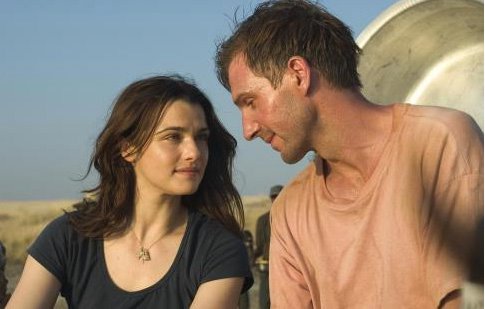
The film has an excellent script based on a famous novel of John Le Carré. As a result all the characters are very well thought and described. The spectator can really understand where they are coming from. Also the theme of the movie is really catching. Murder, scandal and revelations about the way the British government and big pharmaceutical companies work. The humanitarian values are emphasized and the poor-living conditions in Africa are demonstrated. All the details of the narrative really sustain and emphasize the coherence of the film’s story. Moreover Ralph Feinnes seems to be the perfect choice for the main part. His silent looks express perfectly the attitude of quite person that is suffering inside.
Besides the superb story line and the good acting what makes the Constant Gardener a unique film is the combination of the above advantages with a beauty of images and a sophisticated editing. The director has managed to create beautiful images out of the poverty and misery of the African people. The site where Tessa is murdered, for example, has colors so intense and a landscape so beyond natural that manages in spite of its beauty to become a place sinister, a place of death and decay. The editing, on the other hand, with its flash-backs on the relationship of the couple reveals a second parallel story line which is the love story of the film. As Justin (Ralph Feinnes) manages to uncover the scandal of the pharmaceutical company he also reveals the mystery of his dead wife's character and attitude simultaneously restoring his faith and love for her. In this way the film besides being a thriller is a romance about a love that is more true than many Hollywood love stories and has its own unique balance. For Justine Tessa is his consciousness, relentless, just, and completely altruistic. For Tessa Justine is her refuge, an honorable maybe a little bit naïve man who lives outside time and space. In their own way they both protect each other allowing them to be the best of what they are. They complete each other to such extend that one can not exist without the other. When Tessa is murdered Justine is forced to understand his wife to attain her believes and defend her moral position. In this way he becomes one with her and by dying he finally joins her.